Solar Panels and the Smart Export Guarantee: Maximising Your Income
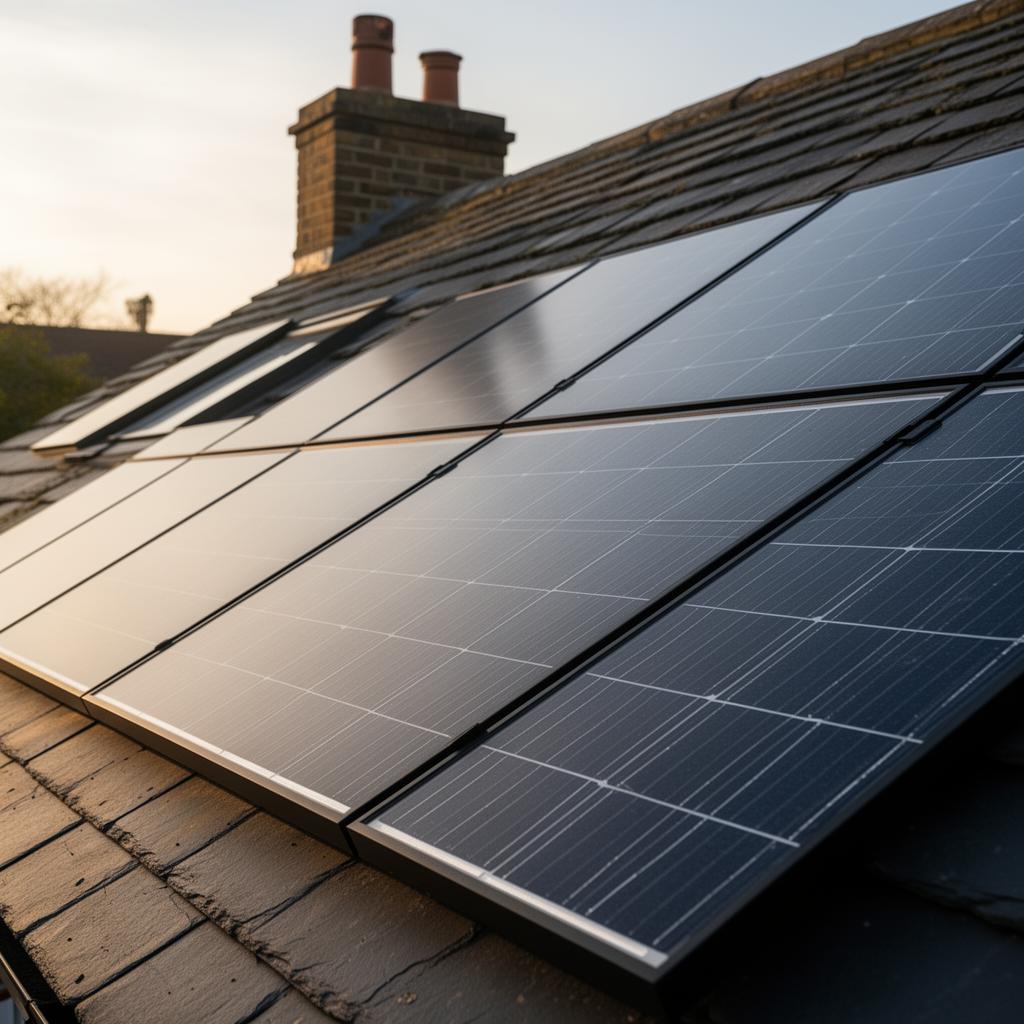
Lancashire solar panel owners can earn between £80 and £350 per year by selling surplus electricity back to the grid through the Smart Export Guarantee (SEG). The best SEG tariffs in 2026 pay 12p to 15p per kWh for exported electricity, while the worst pay just 1p to 3p. Choosing the right tariff and timing your energy use to maximise exports can make a significant difference to your solar payback period.
How to Maximise Your Solar Panel Export Income
- Compare Smart Export Guarantee tariffs — rates vary from 4p to 15p per kWh; Octopus, EDF and British Gas typically offer the highest fixed rates
- Install a solar battery — store surplus daytime generation and export during peak evening hours on agile or time-of-use tariffs to earn more per unit
- Switch to an agile export tariff — Octopus Outgoing pays variable rates that can exceed 30p per kWh during peak demand periods
- Maximise self-consumption first — using your own solar electricity saves 26.32p per kWh (the import rate under Ofgem’s price cap for October to December 2026), which is more valuable than exporting at 4–15p
- Use timers for high-consumption appliances — run your washing machine, dishwasher and EV charger during peak solar generation to reduce imports
- Monitor your system — use your inverter app or a monitoring device to track generation, consumption and export in real time
A typical 4 kWp solar system in the UK exports around 2,000 to 2,500 kWh per year. At the current best fixed SEG rate of 15p per kWh, that generates £300 to £375 in annual export income. Adding a battery and switching to an agile export tariff can increase total income to £400 to £600 per year by shifting exports to higher-value time slots, though this requires more active management of your energy usage.
What Is the Smart Export Guarantee?
The SEG is a government-backed scheme that requires licensed electricity suppliers with more than 150,000 customers to offer a tariff for small-scale renewable generators. If you have solar panels (up to 5MW, though residential systems are typically 3kW to 6kW), you can sign up to an SEG tariff and get paid for every kWh of electricity you export to the grid.
The SEG replaced the old Feed-in Tariff (FiT) in January 2020. Unlike the FiT, which guaranteed fixed rates and was funded through levies on all energy bills, the SEG is market-driven. Each supplier sets its own rate, and rates vary enormously. That means Lancashire homeowners need to shop around to get the best deal.
To qualify for the SEG, your solar installation must be MCS certified, your panels must be no larger than 5MW (all residential systems qualify), and you need a smart meter that can record exports on a half-hourly basis. If you had your panels installed by an MCS certified installer, you automatically meet the certification requirement.
Best SEG Tariffs for Lancashire Solar Owners in 2026
SEG rates change regularly, but here are the standout tariffs as of early 2026:
- Octopus Energy – Outgoing Fixed – Around 15p per kWh. Currently the highest flat-rate SEG tariff available. No contract lock-in. Available to any homeowner with a smart meter, not just Octopus supply customers.
- Octopus Energy – Agile Outgoing – Variable rate that tracks wholesale prices. Can pay 20p+ per kWh during peak demand periods (4pm to 7pm) but drops to 3p to 8p at other times. Best for homes with battery storage that can time their exports.
- Tesla Energy Plan – Around 12p per kWh for Tesla Powerwall owners. Integrates with the Tesla app for automatic export optimisation.
- Ovo Energy – Around 7.5p per kWh. A mid-range option with straightforward terms.
- EDF – Around 5p to 6p per kWh. Below average but accessible to all customers.
- British Gas – Around 3p to 4p per kWh. One of the lowest rates. Worth switching away from if this is your current SEG provider.
The difference between the best and worst SEG tariffs can be worth £200 or more per year for a typical Lancashire 4kW solar system. Switching your SEG provider is free and takes just a few days, so there is no reason to stay on a poor rate.
How Much Can a Lancashire Solar System Export?
A 4kW solar system in Lancashire generates approximately 3,200 to 3,600 kWh per year. The amount you export depends on how much you use directly in your home. Without a battery, most households export around 50% to 60% of their generation – roughly 1,600 to 2,200 kWh per year.
At 15p per kWh (Octopus Outgoing Fixed), that gives you £240 to £330 per year in export income. At British Gas’s 3p per kWh, the same exports earn just £48 to £66. The choice of SEG tariff makes an enormous difference.
With a battery, you can reduce exports to 20% to 30% by storing surplus energy for evening use. This reduces your SEG income but increases your self-consumption, which saves you more money because using your own solar electricity avoids buying at 26.32p per kWh. Whether exporting or self-consuming is more profitable depends on your SEG rate versus your import rate.
Export vs Self-Consumption: Which Earns More?
This is the key calculation for Lancashire solar owners. Every kWh of solar electricity has two possible values: the SEG export rate if you sell it, or the avoided import cost if you use it yourself.
Using a kWh of solar electricity yourself saves you 26.32p (the cost of buying from the grid). Exporting that same kWh earns you 3p to 15p depending on your SEG tariff. Self-consumption is almost always more valuable than exporting, even at the best SEG rates.
This is why battery storage makes financial sense for most Lancashire solar homes. A 5kWh battery costing £2,500 to £3,500 lets you shift solar energy from daytime generation to evening use. Instead of exporting at 15p and buying back at 26.32p later, you use your own stored electricity and save the full 26.32p per kWh.
The exception is the Octopus Agile Outgoing tariff, where export rates occasionally exceed 26.32p during peak demand. If you have a battery and can export strategically during these windows, you can earn more from exporting than from self-consuming. This requires active management or a smart battery system like the GivEnergy or Tesla Powerwall that can automate the process. (GivEnergy status, checked 25 September 2026: GivEnergy Ltd entered administration on 9 April 2026 and has ceased trading, and its hardware warranties aren’t being honoured, as ESS News reported. Installed units keep working, and the app continues under a separate company, GivEnergy Software Ltd.)
Setting Up Your SEG: What You Need
To sign up for an SEG tariff, you need three things:
- MCS certificate – Your installer should have provided this when your panels were installed. It confirms the system was installed to the required standard. If you have lost yours, contact your installer for a copy.
- Smart meter – You need a SMETS2 smart meter (or a SMETS1 that has been enrolled into the DCC network) that can record export data. If you do not have one, request a free smart meter from your electricity supplier. Installation typically takes two to four weeks in Lancashire.
- Proof of installation – The MCS certificate and the Microgeneration Certification Scheme (MCS) installation database entry serve as proof. Your SEG provider will verify this during the application.
The application process is straightforward. Visit your chosen SEG provider’s website, enter your details and MCS certificate number, and submit. Approval usually takes one to two weeks. You can be on a different SEG provider from your electricity supply provider – they do not have to be the same company.
Maximising Your SEG Income: Practical Tips
Time your high-consumption activities. Run your washing machine, dishwasher, and tumble dryer during peak solar generation hours (10am to 3pm) to maximise self-consumption and minimise exports at low rates. This is straightforward if someone is home during the day, or you can use delay timers on your appliances.
Consider a solar diverter. An immersion diverter like the Myenergi Eddi sends surplus solar electricity to your hot water immersion heater instead of exporting it. Heating your hot water for free saves more than most SEG export rates. An Eddi costs £400 to £500 installed and can save an estimated £100 to £200 per year on hot water costs.
Review your SEG tariff annually. Rates change and new tariffs launch regularly. Set a reminder to check your SEG rate every six months and switch if a better deal is available. Switching is free and there are usually no exit fees on SEG contracts.
If you have a battery, optimise export timing. On variable SEG tariffs like Octopus Agile Outgoing, export during peak price windows (typically 4pm to 7pm in winter). Some battery management systems like GivEnergy and Tesla Powerwall can be configured to do this automatically based on price signals.
SEG and the Old Feed-in Tariff: Key Differences
Lancashire homeowners who installed solar panels before March 2019 are likely still on the Feed-in Tariff, which pays a generation tariff (typically 10p to 50p per kWh for all electricity generated, not just exports) plus an export tariff. The FiT is more generous than the SEG and runs for 20 years from your installation date. If you are on the FiT, do not switch to the SEG – you would lose your generation payments.
For new installations from 2020 onwards, the SEG is the only option. It pays only for exported electricity, not generation. This makes self-consumption and battery storage more important for maximising the financial return on your solar investment.
Do I need to be with the same energy supplier for my SEG?
No. You can have your electricity supply from one company and your SEG export tariff from another. This lets you pick the best import deal and the best export deal independently. Many Lancashire solar owners have their supply with one company and their export tariff with Octopus Energy for the higher export rate.
How do I switch my SEG provider?
Sign up with the new SEG provider and cancel with your old one. The new provider handles most of the process. There is usually no gap in payments – your export meter readings transfer to the new provider. The switch typically takes one to two weeks.
Is SEG income taxable?
For most Lancashire homeowners with a domestic solar system, SEG income is tax-free. HMRC treats income from microgeneration on your own home as exempt from income tax, provided the system is no larger than 5MW (all residential systems qualify). You do not need to declare it on your tax return. If you are generating commercially or have a larger system, seek tax advice.
Getting paid enough for your exported power?
Export rates vary twenty-fold between suppliers. We rank every SEG and export tariff monthly, with the conditions attached to each.

Related Articles

Tesla Powerwall 3 vs GivEnergy All in One: what changed in 2026
Both store 13.5kWh of LFP. One discharges at 11.04kW, the other at 3.6kW, and only one is backed by a company still trading after GivEnergy entered administration in April 2026.
30 September 2026
Trina solar panels review UK: Vertex S+ specs, warranty and verdict
Trina's Vertex S+ 445W publishes 22.3% efficiency, 25-year product cover and a dual-glass build. We read the datasheet and say when it's worth specifying and when it isn't.
30 September 2026
JA Solar panels review UK: DeepBlue 4.0 Pro specs, warranty and price
JA Solar's DeepBlue 4.0 Pro publishes 22.8% efficiency, 25-year product cover and a 30-year performance warranty to 87.4%. We read the datasheet and the UK price list.
29 September 2026