Air to air vs air to water heat pumps: which should you buy?
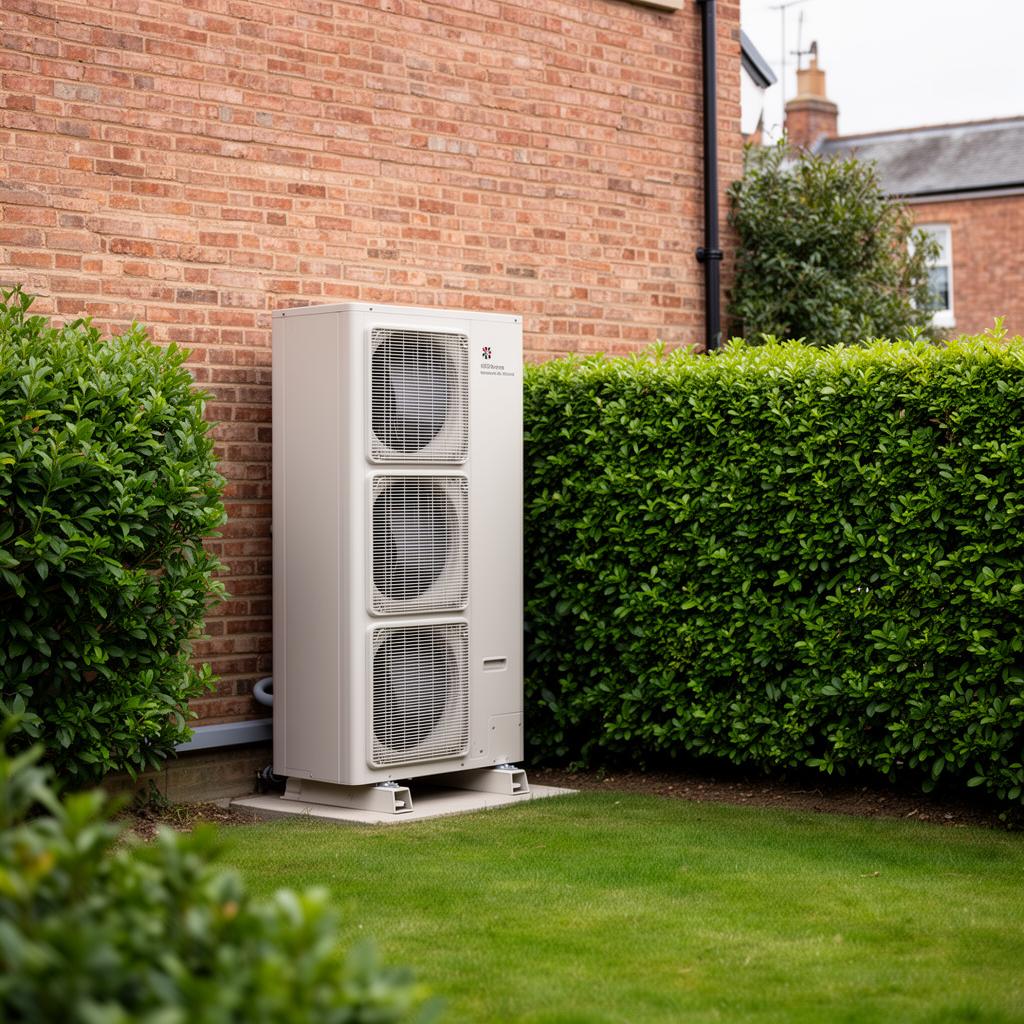
Quick answer: Buy air to water if your home has radiators. It heats your hot water as well as your rooms and attracts a £7,500 grant; the median install cost £12,908 before that grant in April to June 2026. Air to air is cheaper to fit and cools in summer, but it can’t heat water, and no £2,500 air-to-air grant voucher had been issued by the end of August 2026.
We haven’t installed or tested either type. This guide compares manufacturer datasheets, government statistics and the published grant rules, all checked on 25 September 2026.
What each one does
An air to water heat pump (often shortened to A2W) pulls heat from the outside air and puts it into water. That water runs through your radiators or underfloor pipes and heats a hot water cylinder, so it replaces a boiler outright.
An air to air heat pump (A2A) puts the heat straight into room air, through indoor units on the wall or ceiling fed by refrigerant pipes from an outdoor unit. It’s the same hardware as split air conditioning. Mitsubishi sells its MSZ-LN wall units as an inverter heat pump and as air conditioning in the same datasheet, and each 2.5kW-class indoor unit gives 3.2kW of heat (Mitsubishi MSZ-LN datasheet). That’s one room. Heating a whole house means an indoor unit in most rooms.
Air to air vs air to water at a glance
| Air to water | Air to air | |
|---|---|---|
| Heats your hot water | Yes, through a cylinder | No; you need a separate electric system |
| Cooling | Only reversible models, through underfloor pipes or fan coils | Yes; it’s air conditioning |
| Heat delivered by | Radiators or underfloor heating | Wall or ceiling units in each room |
| Published SCOP, same maker | Mitsubishi Ecodan R290: 4.39 to 4.71 at 35°C, 3.38 to 3.51 at 55°C (MCS) | Mitsubishi MSZ-LN: 4.6 to 5.2 (EN 14825) |
| Typical installed cost | £12,908 median before the grant (April to June 2026) | About £6,100 in the smaller homes government expects to fit them; over £20,000 in large detached homes |
| Boiler Upgrade Scheme | £7,500; £9,000 for oil or LPG homes with no mains gas until 31 March 2027 | £2,500 on paper; no installers certified under MCS for it yet |
| Planning in England | Permitted development if it passes the MCS 020(a) sound check | The same, provided it isn’t used solely for cooling |
Hot water: the thing air to air can’t do
This decides it for most houses. The government’s own impact assessment for the grant says air to air heat pumps typically provide only space heating, so a separate hot water system is needed (DESNZ BUS extension impact assessment). It also says grant-funded installs can’t keep the old fossil fuel boiler running alongside, and that any extra hot water heating must be electric.
In practice that means an immersion heater in a cylinder, an instantaneous electric heater, or a separate hot water heat pump. An immersion turns one unit of electricity into one unit of heat. At the hot water SCOP of 2.5 we assume below, an air to water heat pump makes the same hot water for 40% of the electricity. In our example below, that gap more than wipes out air to air’s efficiency lead.
Cooling
Air to air cools properly, because it’s air conditioning. Some air to water units are reversible too: Vaillant’s installation manual lists 4.5kW of cooling for the 3.5 and 5kW aroTHERM plus at 35°C outside (Vaillant). But chilled water needs underfloor pipes or fan coil units to do anything useful. Ordinary radiators aren’t built for it.
Our view: cooling is a good reason to put an air to air unit in a hot loft bedroom or home office. It isn’t a good reason to heat a whole house with one. More in our guide to heat pump cooling in summer.
Air to air vs air to water efficiency
On heating alone, air to air wins. Mitsubishi’s MSZ-LN wall units post SCOPs of 4.6 to 5.2, while the same company’s Ecodan R290 air to water unit posts 4.39 to 4.71 at 35°C flow and 3.38 to 3.51 at 55°C (Ecodan R290 datasheet). Warm air needs a lower delivery temperature than a radiator, and a smaller temperature lift means a higher SCOP.
Two caveats. The test bases differ (MCS for the Ecodan, EN 14825 for the MSZ-LN), so read the gap as direction rather than a precise margin. And the heating SCOP ignores hot water, which air to air doesn’t make.
Running costs at the October to December 2026 price cap
Here’s a worked example for a smallish three-bed needing 9,000kWh of space heating and 2,500kWh of hot water a year. Those demands are our illustrative assumption. Prices are the October to December 2026 price cap: electricity 26.32p/kWh and gas 7.97p/kWh. We’ve assumed an 85% efficient gas boiler, SCOP 3.5 for air to water on radiators, SCOP 2.5 for its hot water, and SCOP 4.6 for air to air. Electricity standing charges apply in every case, so they’re left out.
| Set-up | Energy bought a year | Cost a year |
|---|---|---|
| Gas boiler for heating and hot water | 13,529kWh of gas | £1,078, plus £108 gas standing charge |
| Air to water for heating and hot water | 3,571kWh of electricity | £940 |
| Air to air for heating, immersion for hot water | 4,457kWh of electricity | £1,173 |
| Air to air for heating, old gas boiler kept for hot water (no grant) | 1,957kWh of electricity and 2,941kWh of gas | £749, plus £108 gas standing charge |
So air to water is the cheapest way to replace a boiler completely. Air to air with an immersion costs about the same as staying on gas. The cheapest line on paper keeps the gas boiler for hot water, but it isn’t eligible for the grant and leaves you paying for a gas connection.
If you’re on direct electric heating now, the maths flips. The same 11,500kWh of heat bought at the single capped rate costs £3,027. Off-peak storage heater tariffs cut that, but air to air at SCOP 4.6 cuts the electricity used for space heating by nearly four-fifths. Even at the more cautious 2.8 the government’s impact assessment assumes for air to air, the cut is almost two-thirds. Our storage heaters vs heat pumps guide runs those numbers.
What each costs to install
The median air to water installation under the Boiler Upgrade Scheme cost £12,908 in April to June 2026, including the grant value (DESNZ statistics). After £7,500 off, that’s about £5,408. Our heat pump cost index puts a typical three-bed job at £10,684 including VAT.
Air to air is cheaper in a small home and not in a big one. The government’s impact assessment estimates about £6,100 on average in the smaller homes it expects to take the grant, including electric hot water, and over £20,000 in larger detached houses, because cost climbs with every extra indoor unit.
Grants: what the Boiler Upgrade Scheme says about air to air
GOV.UK lists £7,500 towards an air source heat pump, “sometimes called an air-to-water heat pump”, and £2,500 towards an air-to-air heat pump (GOV.UK). Homes heated by oil or LPG with no mains gas connection get an extra £1,500 on air or ground source until March 2027. You get one grant per property, it has to replace fossil fuel heating, which GOV.UK defines as oil, gas, electric or LPG, and hybrid systems don’t qualify.
Now the catch. The air to air grant started on 28 April 2026, and by the end of August 145 applications had been made and none issued (DESNZ, August 2026 release). MCS, whose certification the grant requires, says: “At the moment, no installers are yet certified to install air-to-air heat pumps” (MCS, checked 25 September 2026). Until that changes, plan on paying full price for air to air. Once a voucher is issued, the installer has three months to fit the system (six for ground source).
The grant covers England and Wales only. Scotland has its own heat pump funding through Home Energy Scotland, and Northern Ireland has no general scheme; see our Northern Ireland guide. Our Boiler Upgrade Scheme guide covers eligibility in full.
Which homes suit which
- Houses with radiators and a boiler: air to water. It uses the pipework you have, heats your water and gets the bigger grant.
- Homes on storage heaters or panel heaters: air to air is a strong option. The government expects at least a third of air to air grants to replace direct electric heating.
- Flats: air to air often fits better, because it needs no cylinder cupboard. Leaseholders will usually need the freeholder’s consent, and in England permitted development allows one outdoor unit per block of flats, no bigger than 0.6 cubic metres. See our heat pumps for flats guide.
- Extensions, conservatories and garden rooms: a single air to air unit, self-funded, alongside your existing heating.
- Homes with underfloor heating: air to water, which runs at its most efficient at 35°C flow. Our underfloor vs radiators comparison explains why.
Noise and planning
In England, the permitted development rules changed on 29 May 2025 (the 2025 amendment order). An air source heat pump can go up without planning permission if the installation passes the MCS 020(a) sound calculation and the unit isn’t used solely for cooling. You’re allowed one unit on a semi, terrace or block of flats and two on a detached house, up to 1.5 cubic metres on a house. The old one-metre boundary rule has gone. Rules in Wales, Scotland and Northern Ireland differ; our planning permission guide covers each.
Outside, the published figures don’t line up neatly. Mitsubishi’s Ecodan R290 outdoor units are rated at 54 to 56 dB(A) sound power in heating; its MUZ-LN air to air outdoor units are rated at 60 to 65 dB(A), but Mitsubishi only gives that figure for cooling. Inside is where they differ. Radiators are silent, while an MSZ-LN wall unit runs from 19 dB(A) on its lowest fan speed to 45 to 49 dB(A) on its highest. In a bedroom, that matters.
Our verdict
If you have radiators, buy air to water. It’s the only one of the two that replaces a boiler without leaving you on an immersion heater, it costs least to run in our example, and its £7,500 grant is being paid today. Pick a unit from our heat pump brands ranking.
Choose air to air if you live in a flat or a home on storage heaters with nowhere to put a cylinder, or if you want to heat and cool one room. Budget for the full price and an electric hot water system, and treat the £2,500 grant as a bonus if MCS certification arrives in time. Either way, request a free quote: up to three approved installers who cover your area may contact you. No charge, no obligation.
This comparison is based on manufacturer datasheets, GOV.UK and DESNZ grant data, MCS guidance and the Ofgem price cap, all checked on 25 September 2026.
FAQs
Is air to air or air to water more efficient?
For space heating, air to air. Mitsubishi’s wall units post SCOPs of 4.6 to 5.2, against 3.38 to 3.51 for its air to water unit at 55°C. Once you add hot water, which air to air can’t make, air to water uses less electricity overall.
Can I get a grant for an air to air heat pump?
The Boiler Upgrade Scheme lists £2,500 for air to air in England and Wales, but by the end of August 2026 no voucher had been issued, and MCS says “no installers are yet certified to install air-to-air heat pumps” (checked 25 September 2026). Air to water gets £7,500 now.
Can an air to air heat pump heat hot water?
No. You need a separate system, such as an immersion heater in a cylinder or a hot water heat pump. For grant-funded installs the government says that extra hot water heating must be electric.
Which is cheaper to run?
In our example at the October to December 2026 price cap, air to water costs about £940 a year for heating and hot water. Air to air with an immersion heater costs about £1,173, close to the £1,078 plus standing charge for gas.
Is air to air heating and cooling worth it in the UK?
For a flat or a home on storage heaters, often yes. At its rated SCOP it cuts the electricity used for heating by nearly four-fifths, and by almost two-thirds at the government’s more cautious 2.8. For a house with radiators and a boiler, air to water is the better buy.
Which grants can you actually get?
Six quick questions, answered entirely in your browser — nothing stored, nothing sent. Covers the Boiler Upgrade Scheme and every devolved alternative.

Related Articles

Grant vs Samsung heat pumps: the value head-to-head
The Aerona 290 and the EHS Gen 7 are the two value picks of the UK heat pump market, priced within £80 of each other. We compare specs, warranties and…
13 October 2026
Combi boiler vs heat pump hot water: what actually changes
Hot water is where combi owners hesitate over heat pumps. The running costs are nearly level; the real trade is on-demand convenience against a cylinder that runs two showers at…
11 October 2026
Bosch Compress heat pump review UK: 5800i vs 7400i
The Bosch Compress 5800i AW pairs R290 and 75C flow with a 41.5 dB(A) sound power figure, the lowest we've seen published. We compare it with the outgoing R410A 7400i…
8 October 2026