Electric Blanket Running Costs: Why a Warm Bed Costs Pennies a Night
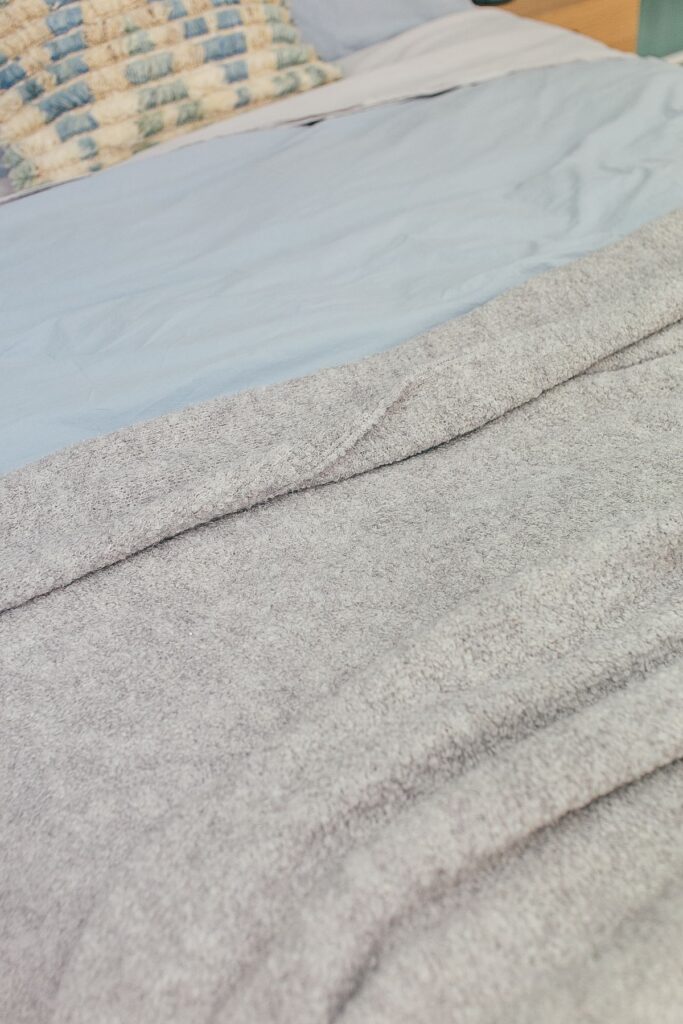
Quick answer: An electric blanket costs pennies — about 2.6p to preheat the bed for an hour at 100W, or around 8p left on low all night. Compare that with roughly £2 for a 2kW heater to warm the bedroom for an evening, and it’s one of the cheapest comforts in the house.
All costs on this page are calculated at the October–December 2026 Ofgem price cap for Direct Debit customers: 26.32p per kWh of electricity, with gas comparisons at 7.97p per kWh. Unit rates vary slightly across the 14 GB regions, so treat these as good averages and check the rate on your own bill.
The sum: why blankets are so cheap
An electric underblanket typically draws 60–100W — a twentieth of a fan heater. The running-cost sum is the usual one: power (kW) × hours × 26.32p per kilowatt-hour. A 100W blanket on for an hour uses 0.1kWh: 0.1 × 26.32p ≈ 2.6p. Left on a low setting overnight it averages around 40W as the thermostat cycles, so eight hours uses roughly 0.32kWh — about 8.4p. The blanket wins because it heats a duvet-sized pocket of air right next to you instead of an entire room.
What different habits cost
| Usage pattern | Energy | Cost |
|---|---|---|
| 30-minute preheat before bed | 0.05 kWh | 1.3p |
| 1-hour preheat (100W) | 0.1 kWh | 2.6p |
| All night on low (~40W average, 8h) | 0.32 kWh | 8.4p |
| A month of nightly 1-hour preheats | 3 kWh | 79p |
| A month of all-night use | 9.6 kWh | £2.53 |
Even the most indulgent pattern — all night, every night — costs about £2.53 a month. Wattages vary by size and brand, so scale by your own label; a king-size dual-control blanket at 150W is still under 4p an hour.
Blanket vs heating the bedroom
Warming a bedroom with a 2kW fan heater for a four-hour evening costs about £2.11 — every night for a month, £63. The blanket approach delivers warmth where you actually feel it for between 79p and £2.53 a month, some 25 to 80 times cheaper. Turning the whole-house heating up a degree to fix one cold bed is more expensive still. The general rule — heat the person, not the space — has no better example.
Using one safely and well
- Buy new and look for current UK/EU safety marking; retire blankets that are worn, creased or more than about ten years old.
- Underblankets warm the bed; heated throws (typically 120–160W) do the same job for sofa evenings at similar pennies-per-hour cost.
- Use the timer or preheat mode rather than leaving it on high all night — most people sleep better with it low or off anyway.
- Never use one with an airflow-restricting mattress topper against the maker’s guidance, and don’t tuck in a bunched-up blanket.
- A warm bed in a cool room is also helped by fixing the room itself — draught-proofing and decent insulation keep the chill off in the first place.
Underblanket, overblanket or heated throw?
All three run on pennies, so choose by use rather than cost. Underblankets (60–100W) sit beneath the sheet and are the classic bed-warmer — the figures in the table above. Heated overblankets and duvets (100–150W) warm from above and suit people who run cold all night. Heated throws (120–160W) are the living-room option: a three-hour sofa evening under a 160W throw uses just under 0.5kWh — about 12.6p — versus £1.58 for the same evening with a 2kW fan heater warming the whole room. For one or two people watching television, the throw is arguably the single best pound-per-cosiness purchase available.
A warm bed in a sensibly cool room
The blanket strategy works best as part of a deliberate choice: keep the bedroom on the cool side, warm the bed itself, and save the serious heating money for living spaces. Many people genuinely sleep better in a cooler room, and the arithmetic is heavily on your side — a whole winter of nightly preheats costs less than a single week of heating the bedroom electrically. If the room is cold because of draughts or a poorly insulated loft rather than by choice, that’s a fabric problem worth fixing once rather than compensating for nightly.
If you’re comparing options for a cold sleeper on a budget, the ranking is straightforward: electric blanket first (pennies, warmth exactly where it’s needed), thicker duvet and bed socks close behind (free after purchase), oil-filled radiator on a timer a distant third (over a pound a night), and turning up the whole-house heating last. It’s rare for the cheapest option to also be the most effective, but a warmed bed is one of those happy cases — the comfort arrives before you do, and the meter barely notices.
FAQs
How much does an electric blanket cost per week?
A nightly one-hour preheat costs about 18p a week at the current cap; all-night use on low is roughly 59p a week. Either way it’s among the cheapest heating habits in the home.
Is it safe to leave an electric blanket on all night?
Modern blankets with overheat protection and dedicated all-night settings are designed for it — check your model’s instructions say so. Older blankets without thermostats should only be used to preheat and switched off before you get in.
Electric blanket or hot water bottle — which is cheaper?
They’re surprisingly close. Boiling 1.5 litres for a hot water bottle costs about 4p, versus 2.6p for an hour’s blanket preheat — but the blanket keeps its warmth topped up all night for pennies, while the bottle fades. For context on what your evening habits cost across the board, see our price cap guide.
What would an upgrade save you?
Pick an upgrade and your region — instant modelled cost, annual saving and payback, from the same dataset behind our local guides.

Related Articles

Best electric heating for a flat with no gas, ranked by running cost
No gas supply doesn't mean expensive heating is inevitable. Air-to-air heat pumps, storage heaters, infrared and panel heaters ranked by what they actually cost to run.
14 October 2026
Storage heater settings for winter: input, output and Economy 7 timing
Input fills the bricks with cheap overnight heat, output spends it. Set them the right way round and Economy 7 works as promised. The winter baseline settings, scenario by scenario,…
14 October 2026
Best combi boiler for a small flat: compact, low-output picks
Small flats need small, quiet combis that fit a kitchen cupboard and don't short-cycle on four radiators. Our picks with prices, dimensions and warranty terms.
12 October 2026