Heated Towel Rail Running Costs: Electric vs Central Heating
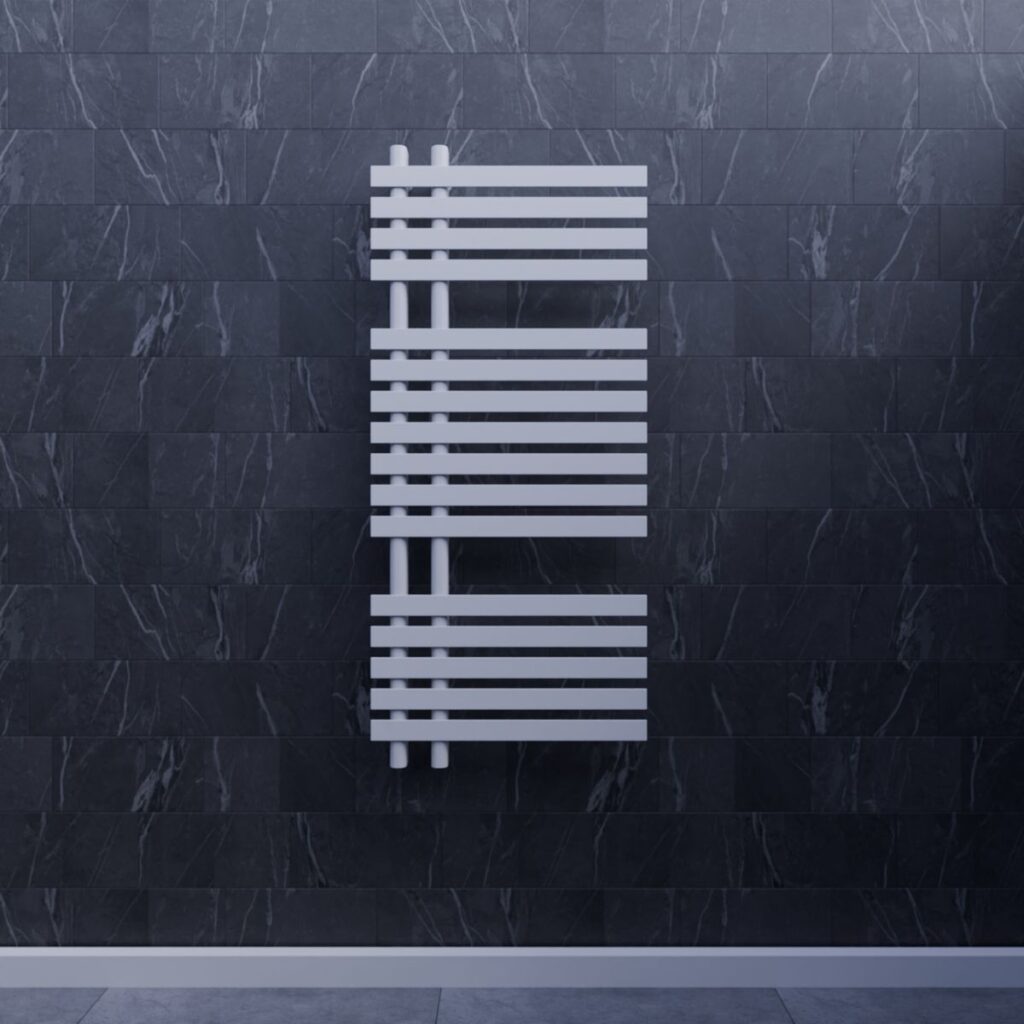
Quick answer: A typical 150W electric heated towel rail costs about 4p an hour — around 24p for six hours a day, or £7 a month. A central-heating towel rail delivers similar warmth for about 34p a day in gas, but effectively rides along with your heating in winter and forces the boiler to fire in summer.
All costs on this page are calculated at the October–December 2026 Ofgem price cap for Direct Debit customers: 26.32p per kWh of electricity, with gas comparisons at 7.97p per kWh. Unit rates vary slightly across the 14 GB regions, so treat these as good averages and check the rate on your own bill.
The sum for any towel rail
Power (kW) × hours × 26.32p per kilowatt-hour. A 150W electric rail is 0.15kW, so one hour costs 0.15 × 26.32p ≈ 3.9p, and a six-hour daily schedule uses 0.9kWh — about 23.7p a day. Electric rails are small resistance heaters, so as ever the wattage on the label sets the ceiling and the timer decides the bill.
Electric vs central-heating rails: daily and monthly costs
| Towel rail option | Power | Cost for 6 hours/day | Cost per month (30 days) |
|---|---|---|---|
| Electric element, 100W | 0.6 kWh/day | 15.8p | £4.74 |
| Electric element, 150W | 0.9 kWh/day | 23.7p | £7.11 |
| Electric element, 250W | 1.5 kWh/day | 39.5p | £11.84 |
| Central-heating rail (~600W heat output, gas) | ~4.2 kWh gas/day | ~34p | ~£10.13 |
The gas figure assumes a boiler at ~85% efficiency turning 7.97p/kWh gas into the rail’s heat. It looks similar to the electric numbers — but the two behave very differently across the year, which is the real story.
Winter vs summer: when each type wins
In winter, a central-heating rail is close to a free rider: your boiler is already running, the rail is just another small radiator, and its heat isn’t wasted — it’s warming a bathroom you wanted warm anyway. In summer the logic flips: firing the whole boiler to warm one towel rail is wasteful, and this is exactly where a modest electric element earns its keep at 16–24p a day, or a dual-fuel rail (plumbed in, with an electric element for summer) gives you both behaviours in one unit. If your rail runs off the heating and your towels are damp from June to September, the dual-fuel conversion is the upgrade to price up.
Keeping the cost in pennies
- Put an electric rail on a timer — two two-to-three-hour windows around morning and evening showers dry towels for around 15p a day; 24/7 running triples it.
- Choose a thermostatic element: it holds a set temperature and cycles off instead of drawing full power non-stop.
- Don’t use a towel rail as a bathroom heater — at 100–250W it dries towels and takes the edge off, but heating the room is a job for the heating system (or see our electric heater cost guide for what that really costs).
- Damp towels dry faster in ventilated bathrooms — sort extraction and you need fewer rail-hours; our showering vs bathing guide covers the moisture the rail is fighting.
Dual-fuel rails: one rail, both seasons
A dual-fuel towel rail is plumbed into the central heating like any radiator but also carries an electric element (fitted via a T-piece), so it can run from the boiler in winter and the element alone in summer. It’s the tidy answer to the seasonal problem above: gas-cheap warmth when the heating is on anyway, 16–24p a day of electric drying when it isn’t, and no need to fire the boiler in July for the sake of dry towels. Retrofitting an element to an existing plumbed rail is a modest job for a plumber or competent installer — if your bathroom already has the rail, you may only need the element and valve work rather than a new unit.
Watts, BTUs and not overbuying
Plumbed rails are often sold by heat output in BTUs (watts × 3.412), sized to contribute to room heating; electric elements are sold in plain watts and sized to warm the rail itself. For towel-drying you don’t need the element to match the rail’s full plumbed output — a 150W element warms a standard ladder rail nicely — and every 100W you don’t buy is roughly 2.6p an hour you never spend. Match big outputs to genuinely cold bathrooms; match small elements to the towels.
FAQs
How much does a heated towel rail cost to run 24/7?
A 150W electric rail running constantly uses 3.6kWh a day — about 95p, or £28 a month at the current cap. A timer cutting that to six hours a day drops it to £7 a month for the same dry towels, which is why round-the-clock running is rarely worth it.
Is an electric towel rail cheaper than using the central heating?
In summer, almost always — a small electric element beats firing the boiler for one rail. In winter, the central-heating rail wins because the boiler is running anyway and gas heat is cheaper per kWh. Dual-fuel rails give you the cheap option in both seasons.
What size electric towel rail element do I need?
For drying towels, 100–150W suits most standard rails; larger multi-rail units may take 250W. Bigger elements dry faster but cost proportionally more per hour — check the label and apply the kW × hours × 26.32p sum, and see our price cap guide for what your unit rate is doing next quarter.
What would an upgrade save you?
Pick an upgrade and your region — instant modelled cost, annual saving and payback, from the same dataset behind our local guides.

Related Articles

Best electric heating for a flat with no gas, ranked by running cost
No gas supply doesn't mean expensive heating is inevitable. Air-to-air heat pumps, storage heaters, infrared and panel heaters ranked by what they actually cost to run.
14 October 2026
Storage heater settings for winter: input, output and Economy 7 timing
Input fills the bricks with cheap overnight heat, output spends it. Set them the right way round and Economy 7 works as promised. The winter baseline settings, scenario by scenario,…
14 October 2026
Best combi boiler for a small flat: compact, low-output picks
Small flats need small, quiet combis that fit a kitchen cupboard and don't short-cycle on four radiators. Our picks with prices, dimensions and warranty terms.
12 October 2026