Solar panels in Northern Ireland: what they cost in 2026
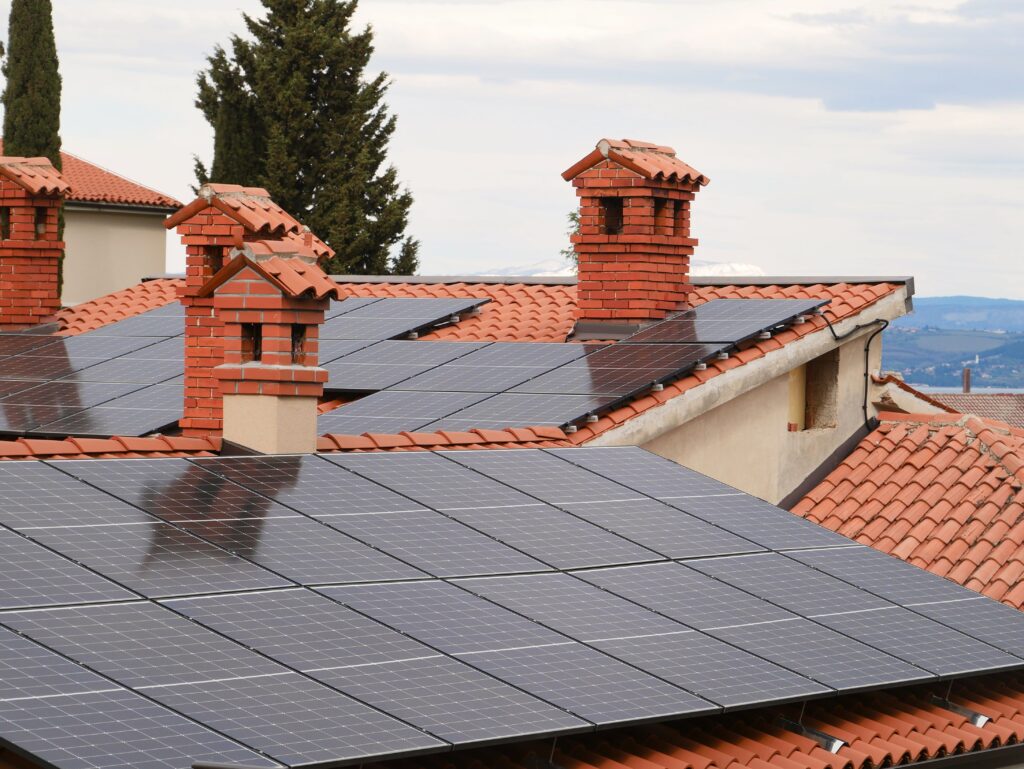
Quick answer: A 4kW solar system in Northern Ireland typically costs £6,000 to £8,000 installed in 2026, slightly below GB prices. There’s no Smart Export Guarantee here, but Power NI pays 9.64p/kWh for exported units until 30 September 2026. VAT is 0% until March 2027, and most roof installs need no planning permission.
Northern Ireland is its own energy market. Ofgem doesn’t regulate it, the GB price cap doesn’t apply, and the export scheme every GB solar guide tells you about simply doesn’t exist here. So most of what you’ve read about solar economics needs adjusting before it’s any use in Belfast or Ballymena.
We haven’t surveyed installers door to door. The figures below come from published NI price guides, Power NI’s own tariff sheet and government documents, checked August 2026.
How much do solar panels cost in Northern Ireland?
Local price guides put a typical 4kW system on a three-bed semi at £6,000 to £8,000 fully installed (prices checked 31 July 2026). That covers panels, inverter, mounting, scaffolding, wiring and certification.
| System size | Typical installed cost | Estimated annual saving | Rough payback |
|---|---|---|---|
| 3kW | £5,000 to £6,500 | About £470 | About 12 years |
| 4kW | £6,000 to £8,000 | About £580 | About 12 years |
| 5kW | £7,000 to £9,500 | About £680 | About 12 years |
| 6kW | £8,000 to £12,000 | About £760 | About 13 years |
Savings and payback are Compare Solar NI’s base case (half the output used at 29p per kWh, the rest exported at 6p, mid-point price; checked September 2026). At the 32p to 34p most Power NI customers pay, it puts the 4kW payback nearer 11 years. Savings depend on how much of the output you use yourself, so treat them as estimates rather than promises.
Our own cost model tells a similar story. We put the GB mid-point for a solar install at £6,496, and Northern Ireland carries the lowest regional index in our model at 0.92, which works out at £5,976 for a typical system, with a realistic spread of £3,900 to £9,300 depending on size and roof. That’s our modelled estimate, not a quote; the workings are at how we calculate costs, and there’s a full buyer’s guide in our solar panels hub.
Why cheaper than England? Labour, scaffolding and travel all cost less. London sits at 1.20 on the same index. Same panels, very different overheads.
What happens to the electricity you export?
This is the big NI difference. The Smart Export Guarantee has never applied in Northern Ireland: it’s Great Britain legislation, administered by Ofgem, whose remit stops at the Irish Sea (Compare Solar NI, 2026). If a GB comparison site promises you an SEG tariff at a BT postcode, close the tab. Our SEG glossary entry explains how the GB scheme works, for context.
What NI has instead is voluntary supplier arrangements. Power NI’s microgeneration tariff pays 9.64p per kWh for exported units in the current tariff year (1 October 2025 to 30 September 2026), a rate approved annually by the Utility Regulator. Other suppliers set their own rates and terms. They change, so check before you sign.
You’ll need export metering, and your installer registers the connection with NIE Networks, which operates the electricity network for the whole of Northern Ireland. Going by Compare Solar NI’s estimate that a 4kW household exports 2,000 to 2,500 kWh a year, that’s roughly £190 to £240 of export income at Power NI’s current rate.
Grid electricity is far dearer than the export rate: Power NI’s standard unit rates start at around 32p per kWh after its July 2026 price rise, and rival NI suppliers have announced increases of their own this summer. A self-used unit is therefore worth more than three times an exported one, which is why batteries make more sense here than in much of GB. We’ve run those numbers in is solar battery storage worth it in 2026.
Do you pay VAT on solar in Northern Ireland?
Not until April 2027. HMRC’s zero rate on energy-saving materials applies in Northern Ireland from 1 May 2023 to 31 March 2027. NI joined a year after Great Britain, but the end date is the same for everyone. From 1 April 2027 the rate reverts to 5%, which adds about £300 to a £6,000 install. If you’re going to do this anyway, doing it before next April is cheaper.
Do you need planning permission?
Usually not. Under the Planning (General Permitted Development) Order (Northern Ireland) 2015, a domestic roof system is permitted development if it’s 50kW or under, projects no more than 200mm from the roof slope and doesn’t rise above the ridge. Action Renewables, the Belfast energy charity, has a plain-English rundown of the rules.
You will need planning permission if the property is listed (grades A, B+, B, B1 or B2) or sits in a conservation area, an Area of Outstanding Natural Beauty or a World Heritage Site. Belfast has several conservation areas, so check with your council if your street is older or leafier than average. The detail differs from the GB rules in our planning permission guide, so don’t assume an English checklist transfers.
Are there any solar grants in NI?
No general one. The Eco Experts put it bluntly: there are currently no government grants for solar in Northern Ireland, and the old NIRO subsidy closed to new applicants back in March 2017. The one narrow exception, Toasty Homes on the 2026/27 NISEP list, offered heat pump, solar PV and battery storage support for eligible households, but McGaffin Mechanical says its NISEP funding is now fully allocated (checked 25 September 2026). The whole programme is broken down in our NISEP grants guide.
For everyone else, the support is structural rather than a cheque: 0% VAT and installer competition.
Is Belfast any different from the rest of NI?
Not on price. Installers quote the same ranges across the province, and travel distances are short. On output, Compare Solar NI’s example 4kW install in Lisburn, just outside Belfast, generates around 3,400 kWh a year, about 850 units per installed kW. Yes, it’s cloudy. The payback maths in the table above already uses NI output, not Andalusian sunshine.
We’re a comparison site. You can request a free quote and, if an approved installer covers your area, they may contact you. There’s no charge and no obligation.
FAQs
Is solar worth it in Northern Ireland’s weather?
At £6,000 to £8,000 for 4kW and around 3,400 kWh a year of output, local guides estimate a 9 to 12 year payback. That stacks up if you’re home enough to use the power. It stacks up faster with a battery.
Who tells NIE Networks about my panels?
Your installer submits the connection notification to NIE Networks as part of the job. You’ll also need export metering in place before a supplier will pay you for exported units.
Should I wait for prices to fall?
Hardware may drift down, but VAT rises from 0% to 5% in April 2027, which cancels roughly £300 of any saving on a typical system. If your roof and finances are ready, waiting has a price tag.
Getting paid enough for your exported power?
Export rates vary twenty-fold between suppliers. We rank every SEG and export tariff monthly, with the conditions attached to each.

Related Articles

Tesla Powerwall 3 vs GivEnergy All in One: what changed in 2026
Both store 13.5kWh of LFP. One discharges at 11.04kW, the other at 3.6kW, and only one is backed by a company still trading after GivEnergy entered administration in April 2026.
30 September 2026
Trina solar panels review UK: Vertex S+ specs, warranty and verdict
Trina's Vertex S+ 445W publishes 22.3% efficiency, 25-year product cover and a dual-glass build. We read the datasheet and say when it's worth specifying and when it isn't.
30 September 2026
JA Solar panels review UK: DeepBlue 4.0 Pro specs, warranty and price
JA Solar's DeepBlue 4.0 Pro publishes 22.8% efficiency, 25-year product cover and a 30-year performance warranty to 87.4%. We read the datasheet and the UK price list.
29 September 2026