Home battery installation cost UK: what you’ll actually pay in 2026
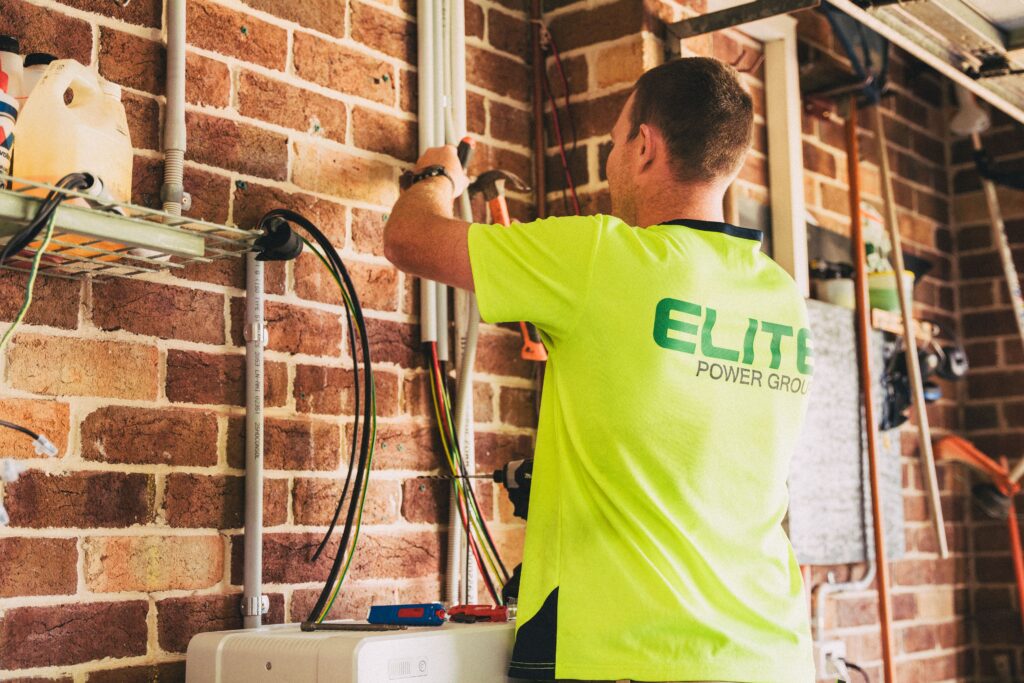
Quick answer: Most UK homes pay £3,500 to £8,500 for a fully installed home battery in 2026, at 0% VAT. Hardware is the biggest line by far; installation typically adds £1,400 to £1,750, and extras such as consumer unit work (£400 to £700) or backup wiring (£300 to £600) push quotes up from there.
How much does an installed home battery cost?
Most installs land between £3,500 and £8,500 all-in, based on Djuka Electrics’ 2026 cost guide. Size is the main driver:
| Usable capacity | Typical installed cost (0% VAT) |
|---|---|
| 5kWh | £3,500-£4,500 |
| 10kWh | £5,500-£7,000 |
| 13.5kWh | £7,500-£9,000 |
Our own modelled mid estimate for a home battery is £5,200, with a realistic range either side of that; see how we calculate costs. Region moves the number too. On our modelled regional index, London prices run about 20% above the national mid (roughly £6,240 on that £5,200 example) while Scotland, Yorkshire and the North West come in a few per cent under it. Same battery, same wiring, different labour market.
What’s hardware and what’s labour?
Heatable’s brand price table shows the split clearly. A Tesla Powerwall 3 is listed at £5,600 supply plus £1,750 installation. An Alpha ESS G3 (10.1kWh) is £2,550 plus £1,400. A SolaX Triple Power (5.8kWh) is £2,100 plus £1,400.
Spot the pattern. The hardware price triples between brands; the installation line barely moves. Much of the job is fixed: wiring, isolators, mounting, commissioning and DNO paperwork cost the same whatever size the battery is. Because labour is broadly fixed, a bigger battery almost always costs less per kWh installed. That’s an argument for sizing up slightly, within reason; the sweet spot depends on how much you can actually cycle each day.
Which extras push a quote up?
- Consumer unit upgrade: £400-£700 if your board is old or full.
- Long or awkward cable runs: £150-£500 depending on distance and access.
- Backup (EPS) wiring so chosen circuits work in a power cut: £300-£600, per Green Hat Renewables.
- AC-coupling onto existing solar: £200-£600, plus £300-£500 commissioning if the battery is the only job that day.
Component figures are from Djuka Electrics. Watch the consumer unit line: it sits outside the battery VAT relief, so that part of the bill carries 20% VAT. A quote that looks £500 dearer than a rival’s may just be pricing the board work honestly.
What does a realistic quote look like?
Take the figures above and price up a 10kWh retrofit on an existing solar system. Battery hardware around £2,550 (Heatable’s Alpha ESS G3 line). Installation £1,400. A backed-up fridge and router circuit, £400. A consumer unit swap because the old board is full, £550 plus its VAT. Call it £4,900 to £5,100 all-in.
Notice that nearly half that bill isn’t the battery. This is why two quotes for “a 10kWh battery” can sit £1,500 apart and both be honest. When you compare quotes, compare the line items, and be suspicious of any installer who won’t break them out.
How do VAT and the DNO affect the price?
Battery installations are zero-rated for VAT until 31 March 2027, with or without solar. On a £3,500 to £8,500 job, that’s £700 to £1,700 you’re not paying compared with the standard rate. Our guide to claiming the zero rate covers what qualifies.
Your installer also has to tell the local grid operator. Smaller systems are notified after connection under G98. Higher-output systems need G99 approval before they’re switched on, which the installer files for you but which can add a few weeks to the schedule. It’s paperwork, not a haggle, and it’s usually wrapped into the quote.
Two timing points follow from that. If your heart is set on a high-output system, ask the installer early whether G99 approval applies, because it sets your install date. And if you want the zero VAT rate, the job needs completing before the relief ends in March 2027. Neither is a reason to rush a decision. Both are reasons not to sit on a quote for six months.
When does a battery-only install cost more?
Three situations, all from Heatable’s scenarios. A retrofit that also needs your inverter replaced runs £6,000 to £8,000 or more, because you’re buying a hybrid inverter along with the cells. A battery fitted alongside new solar shares the labour and lands at £10,000 to £14,000 for the whole system. And a standalone battery with no solar at all still costs £4,000 to £8,000.
The cheapest time to buy a battery is the day your solar goes in. If you already have panels, read our retrofit guide first; if you have no panels and cheap overnight electricity, a standalone battery can still work, as we cover in battery storage without solar.
FAQs
What size battery should I get?
Match it to your evening and overnight usage, not your roof. A 5kWh unit suits a low-usage flat; most three-bed homes sit around 10kWh; 13.5kWh and up suits heat pumps and EVs. The sizing guide has worked examples.
Do the prices in this guide include VAT?
Yes. Batteries are zero-rated until 31 March 2027, so installed prices are what you pay. The exception is associated work like a consumer unit swap, which is standard-rated at 20%.
Will the battery pay for itself?
It can, but the maths depends on your tariff and how hard you cycle it. Payback is a tariff question as much as a hardware question. We work through the savings side in our guide to battery storage costs and benefits.
Getting paid enough for your exported power?
Export rates vary twenty-fold between suppliers. We rank every SEG and export tariff monthly, with the conditions attached to each.

Related Articles

Tesla Powerwall 3 vs GivEnergy All in One: what changed in 2026
Both store 13.5kWh of LFP. One discharges at 11.04kW, the other at 3.6kW, and only one is backed by a company still trading after GivEnergy entered administration in April 2026.
30 September 2026
Trina solar panels review UK: Vertex S+ specs, warranty and verdict
Trina's Vertex S+ 445W publishes 22.3% efficiency, 25-year product cover and a dual-glass build. We read the datasheet and say when it's worth specifying and when it isn't.
30 September 2026
JA Solar panels review UK: DeepBlue 4.0 Pro specs, warranty and price
JA Solar's DeepBlue 4.0 Pro publishes 22.8% efficiency, 25-year product cover and a 30-year performance warranty to 87.4%. We read the datasheet and the UK price list.
29 September 2026