How Much Does It Cost to Boil a Kettle in the UK? (And What Overfilling Really Wastes)
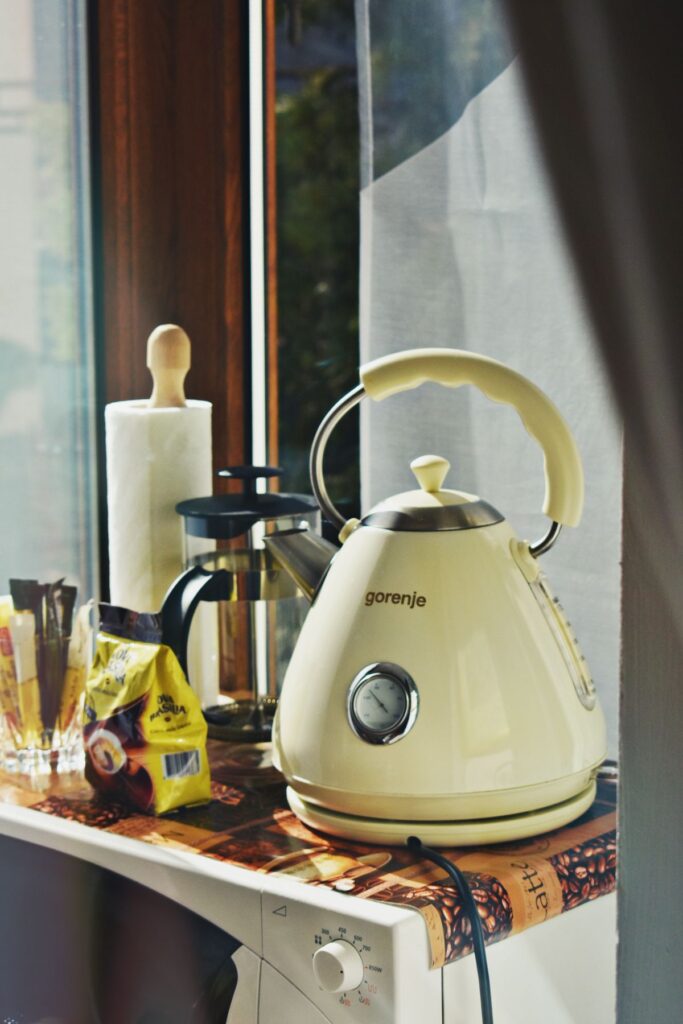
Quick answer: Boiling a litre of water costs about 2.6p at the current cap — so a single 300ml mug costs under a penny, and a full 1.7-litre kettle about 4.5p. Habitually boiling a full kettle for one mug, five times a day, wastes roughly £67 a year.
All costs on this page are calculated at the October–December 2026 Ofgem price cap for Direct Debit customers: 26.32p per kWh of electricity, with gas comparisons at 7.97p per kWh. Unit rates vary slightly across the 14 GB regions, so treat these as good averages and check the rate on your own bill.
The sum: what boiling water actually takes
Heating water is pure physics: raising one litre from a 15°C tap to 100°C takes about 0.1 kilowatt-hour of energy. At 26.32p per kWh, that’s 0.1 × 26.32p ≈ 2.6p per litre, whatever kettle you own. A 3kW kettle simply delivers that energy in about two minutes; a cheaper 2.2kW model takes longer but uses essentially the same energy for the same water.
Cost per boil, by how much you fill it
| Amount boiled | Energy used | Cost | Approx. time (3kW kettle) |
|---|---|---|---|
| One mug (300ml) | 0.03 kWh | 0.8p | ~40 seconds |
| Two mugs (500ml) | 0.05 kWh | 1.3p | ~1 minute |
| One litre | 0.10 kWh | 2.6p | ~2 minutes |
| Full kettle (1.7 litres) | 0.17 kWh | 4.5p | ~3.5 minutes |
Real kettles lose a little heat to the room and the kettle body, so add a few percent in practice — but the pattern holds: the cost scales almost exactly with how much water you put in.
Overfilling: the classic kettle money leak
Boil a full 1.7 litres to make one 300ml mug and you’ve spent 4.5p to use 0.8p of it — 3.7p heated for nothing. Do that five times a day and the waste alone comes to about 18p a day, or roughly £67 a year, before a single cup of tea is counted. It’s one of the clearest examples of how small kitchen habits scale: the appliance is blameless, the fill level is everything.
What sensible habits cost over a year
Four boils a day at 500ml — enough for two mugs each time — costs about 5.3p a day, or £19 a year. The same four boils with a full kettle every time costs about 17.9p a day, around £65 a year. Boiling only what you need could save a typical tea-drinking household around £46 a year, for zero effort beyond a glance at the water gauge. Fill the mug you’re using, tip it into the kettle, and you’ve measured perfectly.
Kettle vs hob vs microwave for boiling water
A gas hob can boil water marginally cheaper on paper — roughly 0.2kWh of gas (about 1.6p a litre, assuming ~50% of the flame’s heat reaches the water) — but it’s slower and the saving is a penny at best. A microwave is the dearest of the three for boiling, since more of its input is lost before reaching the water. The electric kettle’s concealed element heats the water directly, making it the most efficient electric option and the most convenient overall. For the wider picture on cheap cooking methods, see our energy-efficient cooking guide and our microwave vs oven vs hob comparison.
Do variable-temperature and one-cup kettles help?
More than most kitchen gadgets, because they attack the two real costs: heating water you won’t use, and heating it hotter than you need. A variable-temperature kettle set to 80°C for coffee heats the water through 65°C instead of 85°C — about a quarter less energy per boil, and better coffee according to most baristas. One-cup dispensers take the other route, boiling ~300ml on demand so overfilling becomes impossible. Neither saves money if you already fill carefully, but both make the good habit automatic, which is usually what decides whether a saving actually happens.
Six kettle habits that add up
- Fill by the mug, not by feel — pour cold water from the cup you’re about to use.
- Use the water gauge and stop at the minimum-fill line for one drink (most kettles need ~500ml to cover the element).
- Don’t reboil out of habit: water that boiled two minutes ago only needs a moment, not a full cycle.
- Making several rounds? Boil once into a vacuum flask — it holds pouring temperature for hours and suits working-from-home days perfectly.
- Descale every few months so the element heats water, not limescale.
- Let the numbers keep perspective: at sensible fills the kettle is around £19 a year — small next to heating and hot water, so fix the habit and move on to the bigger wins.
FAQs
Does a rapid-boil 3kW kettle use more electricity?
No — it uses more power for less time, and the energy (and cost) for the same water is virtually identical to a lower-wattage kettle. You’re paying for speed, not extra consumption.
How much does the kettle add to a typical annual bill?
A household boiling the equivalent of four sensible 500ml boils a day uses around 73kWh a year — roughly £19 at the current cap. Heavy overfillers can double or triple that, which is why fill level matters more than the kettle itself.
Is it worth descaling the kettle to save money?
Limescale mainly slows boiling and shortens the kettle’s life; the energy penalty is modest but real, since scale insulates the element. A cheap citric-acid descale every few months keeps it boiling at full speed — and if you’re chasing bigger wins, our price cap guide shows where the serious money in your bill actually sits.
What would an upgrade save you?
Pick an upgrade and your region — instant modelled cost, annual saving and payback, from the same dataset behind our local guides.

Related Articles

Best electric heating for a flat with no gas, ranked by running cost
No gas supply doesn't mean expensive heating is inevitable. Air-to-air heat pumps, storage heaters, infrared and panel heaters ranked by what they actually cost to run.
14 October 2026
Storage heater settings for winter: input, output and Economy 7 timing
Input fills the bricks with cheap overnight heat, output spends it. Set them the right way round and Economy 7 works as promised. The winter baseline settings, scenario by scenario,…
14 October 2026
Best combi boiler for a small flat: compact, low-output picks
Small flats need small, quiet combis that fit a kitchen cupboard and don't short-cycle on four radiators. Our picks with prices, dimensions and warranty terms.
12 October 2026