Powerwall 3 vs Powerwall 2: what actually changed
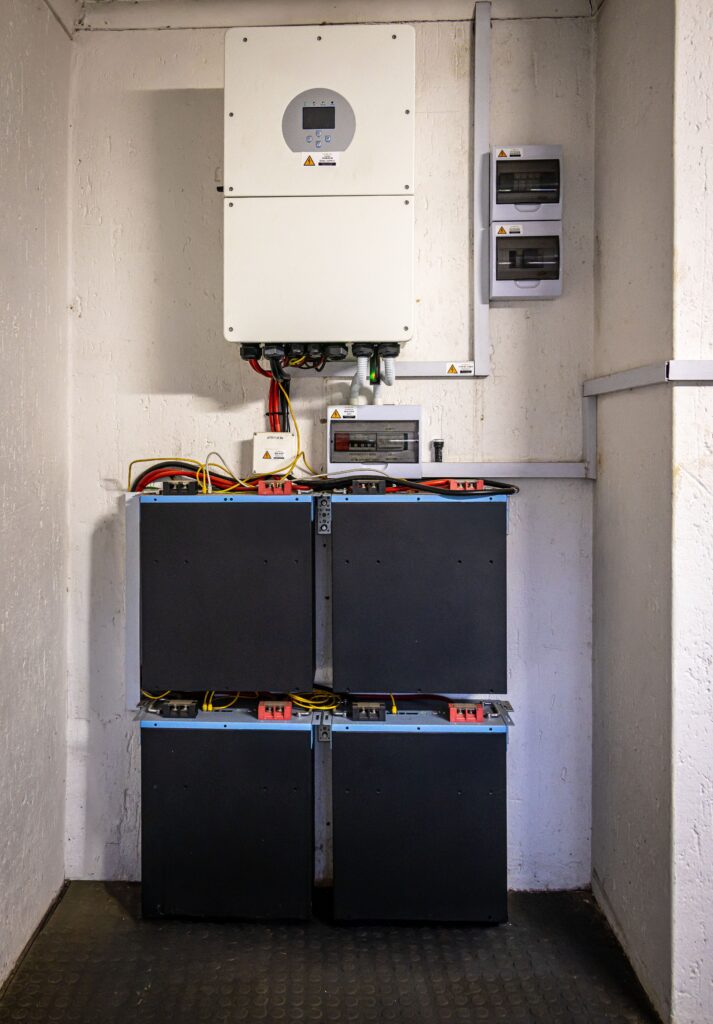
Quick answer: Same 13.5kWh of storage. The Powerwall 3 delivers 11.04kW of continuous output against the Powerwall 2’s 5kW, builds the solar inverter into the box and switches to LFP cells. Tesla discontinued the Powerwall 2 in the UK after the 3 launched in 2024, so for new installs the decision is made for you.
We haven’t tested either unit. This comparison is based on published specifications and prices, checked 1 August 2026.
Is the Powerwall 2 still sold in the UK?
No. The Powerwall 3 arrived in the UK in 2024 and the 2 was discontinued here, as Tesla installer Infinity Energy confirms. Every new Tesla battery installed in the UK today is a Powerwall 3.
So why compare them? Because plenty of Powerwall 2s are on UK walls, and owners keep asking whether the 3 is worth switching to. And because old stock and used units still surface for sale.
How do the specs compare?
| Spec | Powerwall 2 | Powerwall 3 |
|---|---|---|
| Usable capacity | 13.5kWh | 13.5kWh |
| Continuous output | 5kW | 11.04kW (UK spec) |
| Solar inverter | Separate unit required (AC-coupled) | Integrated, with three MPPTs on UK units |
| Cell chemistry | NMC | LFP (cobalt-free) |
| Charging efficiency | 92-93% | 96-97% |
| Weight | 114kg | 130kg |
| Expansion | Multiple Powerwalls | Expansion packs, up to 40.5kWh extra (54kWh total) |
| Warranty | 10 years | 10 years |
Figures from Clean Energy Reviews and Infinity Energy. The output jump is the headline: a 9.5kW electric shower alone exceeds what a Powerwall 2 can supply, while the 3 can run one with room to spare. Capacity, though, didn’t move at all.
What didn’t change?
Three things, and they matter. Capacity stayed at 13.5kWh, so the 3 stores no more energy than the 2. The warranty stayed at 10 years. And backup still isn’t built in: both generations need Tesla’s separate Gateway hardware before they’ll run your home in a power cut.
If you bought a Powerwall for stored kilowatt-hours rather than raw power, the 3 gives you nothing the 2 didn’t. Tesla spent its development budget on output and integration, not on capacity. Worth remembering when someone tells you the new one is “twice the battery”. It’s twice the power output. It is not twice the battery.
Why does the built-in inverter matter?
The Powerwall 2 is an AC-coupled battery. Your panels feed a separate solar inverter, and the battery converts that AC back to DC to store it, then to AC again to use it. Each conversion loses energy, which is why Clean Energy Reviews puts its charging efficiency at 92-93%.
The Powerwall 3 is a hybrid: panels wire straight into it, DC to DC. Dropping the separate inverter removes a failure point and a whole set of conversion losses. Charging efficiency climbs to 96-97% on the same source’s figures. It also simplifies new installs. Our guides to AC vs DC coupling and hybrid inverters explain the plumbing properly.
One wrinkle for retrofits: if you already have healthy solar with its own inverter, a hybrid battery duplicates kit you’ve paid for. Read our retrofit guide before assuming the newest model is the right fit.
What are those efficiency points worth in cash? If you cycle 8kWh through the battery daily, roughly four points of extra loss on a Powerwall 2 wastes around 0.3kWh a day. At the current price cap unit rate of 26.32p/kWh, that’s in the region of £30 a year. Real money, but not replace-your-battery money.
What does a Powerwall 3 cost in 2026?
The unit is £6,495, and a typical installed price runs £7,395 to £7,999: Heatable’s price guide quotes about £7,395 installed and Octopus Energy starts at £7,999, both checked September 2026. Home batteries are zero-rated for VAT until 31 March 2027, which is already baked into those numbers. Need more than 13.5kWh? Expansion packs add up to 40.5kWh to one unit, for 54kWh in total, per Tesla’s UK page.
Should Powerwall 2 owners upgrade?
No. Upgrading a working Powerwall 2 buys you no extra storage at all. You’d spend £7,400 or more to gain output headroom and a few efficiency points, and for most households the payback on that simply never arrives. The 2’s cells and 10-year warranty keep doing their job regardless.
The exception is a growing home: heat pump arriving, EV on order, usage climbing. Even then, adding capacity is usually smarter than replacing it. Compare the current field in our home battery comparison and the full Powerwall 3 review.
And used or old-stock Powerwall 2s? We’d pass. You still need a separate solar inverter, the warranty position on a second-hand unit is uncertain, and the price gap to a new Powerwall 3, or a cheaper rival, is rarely wide enough to carry that risk. A discounted battery with an unclear warranty is a gamble, not a bargain.
FAQs
Does the Powerwall 3 work in a power cut?
Yes, with the Backup Gateway. It isolates your home from the grid so the inverter can keep running safely and legally during an outage. Without the Gateway, the system shuts down like any other grid-tied install.
Is the Powerwall 3 physically bigger?
It’s a different shape rather than bigger: about 45mm shorter, 145mm narrower and 45mm deeper than the 2 (1,105 x 609 x 193mm against 1,150 x 753 x 147mm), going by the dimensions Tesla and Heatable publish. It is heavier though, at 130kg against 114kg, which matters for wall mounting.
Did the warranty change between models?
Both models carry a 10-year warranty, with the Powerwall 3 guaranteeing 80% of capacity at year ten. That now trails Fox ESS at 12 years and Enphase at 15, which is worth weighing if warranty length drives your decision.
Getting paid enough for your exported power?
Export rates vary twenty-fold between suppliers. We rank every SEG and export tariff monthly, with the conditions attached to each.

Related Articles

Tesla Powerwall 3 vs GivEnergy All in One: what changed in 2026
Both store 13.5kWh of LFP. One discharges at 11.04kW, the other at 3.6kW, and only one is backed by a company still trading after GivEnergy entered administration in April 2026.
30 September 2026
Trina solar panels review UK: Vertex S+ specs, warranty and verdict
Trina's Vertex S+ 445W publishes 22.3% efficiency, 25-year product cover and a dual-glass build. We read the datasheet and say when it's worth specifying and when it isn't.
30 September 2026
JA Solar panels review UK: DeepBlue 4.0 Pro specs, warranty and price
JA Solar's DeepBlue 4.0 Pro publishes 22.8% efficiency, 25-year product cover and a 30-year performance warranty to 87.4%. We read the datasheet and the UK price list.
29 September 2026