Selling a House With Leased or Loan-Funded Solar Panels: What Buyers and Lenders Check
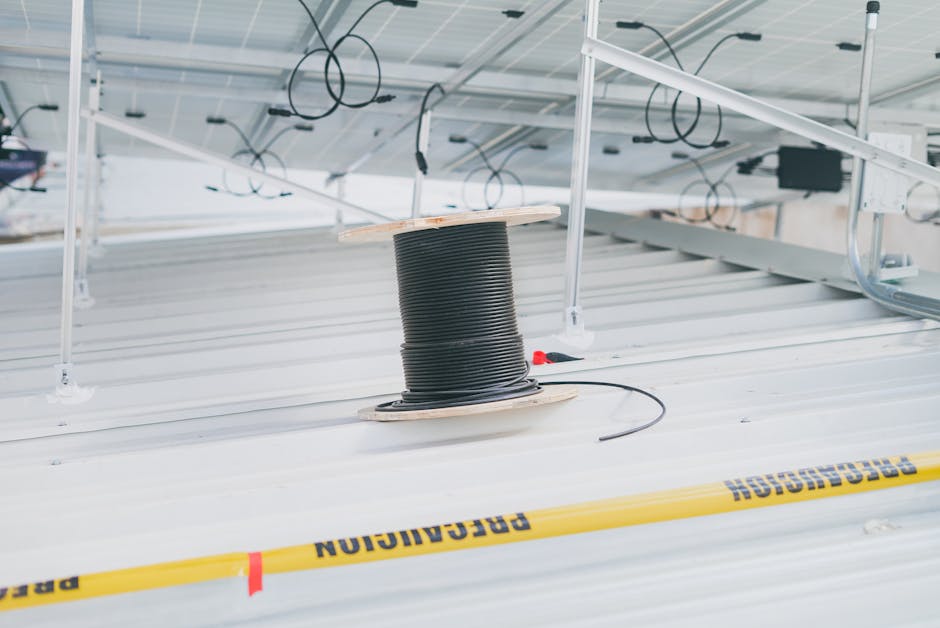
Quick answer: panels you own outright generally help a sale — they are fixtures that pass with the house. Panels bought with a personal loan are nearly as simple: the loan is yours, not the property’s, so you keep paying it or clear it from the sale proceeds. The complicated case is a “rent-a-roof” lease, where a company owns the panels under a 20–25 year lease of your roof: the buyer’s mortgage lender will want that lease to meet the UK Finance Mortgage Lenders’ Handbook requirements (paragraph 5.20) before approving the loan, and fixing a non-compliant lease takes time and legal fees.
First, work out which setup you actually have
Thousands of UK homes had “free” panels fitted between roughly 2010 and 2015, when generous Feed-in Tariff rates made it profitable for companies to install at no cost, keep the FiT income for 20–25 years, and give the householder the free daytime electricity. If that is your house, there is a registered lease of your roof space on the title. If you paid for the panels — cash, mortgage top-up or an unsecured loan — you own them, whatever finance sits behind them. Domestic power purchase agreements (PPAs) are rare in the UK but work like a lease: the company owns the kit and you buy the electricity. Our guide to solar finance options — loans, leases and PPAs explains the three models in detail.
Selling with owned panels (including loan-funded ones)
This is the easy case, and worth stating plainly because sellers sometimes panic unnecessarily:
- The panels are fixtures — they transfer with the house and are simply noted on the TA10 fittings and contents form
- An unsecured personal loan does not attach to the property; you keep paying it or settle it at completion, and the buyer never sees it
- If you receive FiT payments, the right to them transfers to the new owner — notify your FiT licensee at completion and hand over the MCS certificate and paperwork
- Smart Export Guarantee contracts do not transfer — the buyer simply signs up with a supplier of their choice after moving in
- Owned panels with paperwork in order are increasingly a selling point — see our evidence on whether solar adds value when selling
The only preparation needed: dig out the MCS certificate, warranty documents and FiT/SEG statements before your solicitor asks. Missing paperwork, not the panels, is what slows these sales down.
Selling with a rent-a-roof lease: what conveyancers check
A leased system adds a second landowner interest to your title, and the buyer’s lender cares about it because a badly drafted lease can obstruct repossession and resale. Lenders’ requirements for solar roof leases are set out in paragraph 5.20 of the UK Finance Mortgage Lenders’ Handbook for England and Wales. The buyer’s conveyancer will check, among other things, that the lease:
- Lets a mortgage lender terminate or break the lease if they repossess, so the house can be sold
- Deals properly with insurance, maintenance and access obligations
- Does not charge unreasonable fees for consents during a sale or remortgage
Most leases written by the big rent-a-roof firms after 2011 were drafted to comply, because the industry adapted quickly to what was then the CML guidance. Older or sloppier leases are where trouble starts: the fix is a deed of variation agreed with the panel company, which adds weeks and legal fees to a sale, and a minority of lenders decline leased-panel properties regardless (SAM Conveyancing; Wards Solicitors).
Your three options as the seller
- 1. Buyer takes over the lease — the default route. The buyer commits to the remaining term, the panel company consents (often with an admin fee), and both sets of solicitors handle it as part of conveyancing. Expect extra enquiries and a slightly longer transaction
- 2. Buy out the lease — most agreements include a buyout schedule, with the price falling as the term runs down. Early in a 25-year lease it can be a five-figure sum; late on it can be modest. You then own the panels (and any remaining FiT income), which simplifies the sale and can recoup part of the cost
- 3. Negotiate removal — rare and usually the worst deal, since the company loses its FiT income stream and prices accordingly
If you are years from selling, it is still worth requesting the current buyout figure now — it is the number every future negotiation hangs on.
If you are the buyer
Leased panels are not a reason to walk away — free daytime electricity for the remaining term is genuinely useful — but go in with eyes open. Ask for: the lease itself, years remaining, any payment escalators, the buyout schedule, who insures and maintains the panels and the roof beneath them, and what happens at the end of the term. Make sure your solicitor confirms the lease meets the Handbook requirements before you pay for surveys, and tell your mortgage broker up front — lender policies differ (Online Mortgage Advisor).
Frequently asked questions
Do leased solar panels stop a house sale?
Rarely stop — but they can slow one. The typical friction is a lender requesting a deed of variation, or a buyer’s first-choice lender declining and the buyer switching lender. Starting the paperwork early — lease, buyout schedule, panel company contact — removes most of the delay.
Does the buyer get the FiT income on a leased system?
No — that is the point of the lease: the panel company keeps the generation payments. The householder’s benefit is the free daytime electricity. On owned systems still within the FiT scheme, the income does pass to the new owner.
What about panels bought through a solar loan secured on the house?
A secured loan or further advance is a charge on the property, so it must be repaid or transferred at sale like any other secured borrowing — your conveyancer handles it alongside the main mortgage. This is different from the unsecured personal loans most modern installers arrange, which stay with you personally. Our finance options guide covers how to tell them apart.
Thinking about solar for your next home instead? Run the free savings calculator, read the solar panel cost guide, or register your interest for installer quotes when our comparison service launches.
Getting paid enough for your exported power?
Export rates vary twenty-fold between suppliers. We rank every SEG and export tariff monthly, with the conditions attached to each.

Related Articles

Tesla Powerwall 3 vs GivEnergy All in One: what changed in 2026
Both store 13.5kWh of LFP. One discharges at 11.04kW, the other at 3.6kW, and only one is backed by a company still trading after GivEnergy entered administration in April 2026.
30 September 2026
Trina solar panels review UK: Vertex S+ specs, warranty and verdict
Trina's Vertex S+ 445W publishes 22.3% efficiency, 25-year product cover and a dual-glass build. We read the datasheet and say when it's worth specifying and when it isn't.
30 September 2026
JA Solar panels review UK: DeepBlue 4.0 Pro specs, warranty and price
JA Solar's DeepBlue 4.0 Pro publishes 22.8% efficiency, 25-year product cover and a 30-year performance warranty to 87.4%. We read the datasheet and the UK price list.
29 September 2026