Solar Panel Removal and Reinstallation Costs: Reroofing With Panels in 2026

Quick answer: having solar panels taken off and put back for a reroof typically costs £100–£250 per panel for the full remove-store-refit cycle — call it £1,200–£2,500 for a typical 10–12 panel home, on top of the roofing bill. The single biggest saving is coordination: one scaffold hire shared between the solar firm and the roofer instead of two, and an MCS-certified installer doing the electrical work so your warranties survive.
When panels have to come off
- Reroofing — the most common reason; tiles, slates or felt under the array cannot be replaced around it
- Structural repairs — rafter, chimney or leadwork jobs under or beside the array
- Extensions and loft conversions — dormers and raised ridges that change the roofline
- Persistent leaks around mounting brackets — rare with a competent original install, but it happens
If your roof is sound, panels do not need to come off for their own sake — modern systems are designed to sit for 25+ years, roughly the working life of the panels themselves (see our lifespan data).
What removal and reinstallation costs in 2026
| System size | Remove, store and refit | Typical extras |
|---|---|---|
| 6–8 panels (small semi or bungalow) | £900–£1,700 | Recommissioning £100–£200 |
| 10–12 panels (typical 3-bed home) | £1,200–£2,500 | New rails/brackets £300–£600 if needed |
| 14–16 panels (larger detached) | £1,800–£3,500 | Scaffold extension if array spans elevations |
Estimates from published 2026 UK cost guides and installer pricing — your quote depends on access, panel type and how the original system was mounted. Not guarantees.
The breakdown behind those figures: electrical disconnection and isolation, lifting panels and rails off, safe storage while the roof is done, refitting to the new roof covering, and recommissioning with fresh test certificates. If the original rails are corroded or incompatible with the new tiles — common when switching from concrete tiles to slate — add £300–£600 for new mounting kit. Scaffolding is the other big line: if the roofer is hiring it anyway, panel work can often share it, which is why the same job costs wildly different amounts depending on who coordinates it — our solar scaffolding cost guide explains what that hire is worth.
Who should do the work — and the warranty trap
Split the job cleanly: the roofer does the roof, an MCS-certified solar installer does everything electrical. Letting a roofing crew unbolt live DC strings is a safety issue, and it is also the fastest way to lose cover:
- Panel product and performance warranties (the 25–30 year ones) generally survive removal — provided the panels are handled and refitted correctly
- Workmanship warranties on the original installation can be voided if anyone other than a qualified installer disturbs the system
- Insurance-backed guarantees usually require notification before work starts
Our guide to solar panel warranties and what they actually cover breaks down which document matters here. Two more phone calls worth making before work starts: your home insurer (panels off the roof and stored on site should be noted on the policy) and, if you still receive Feed-in Tariff payments, keep your FiT paperwork safe — payments simply resume from your generation meter readings once the system is recommissioned.
Reroofing economics: do it once, do it now?
A useful rule of thumb before any solar install — and doubly so if you are reading this with panels already up: panels will sit on that roof for 25+ years, so a roof with less than 10–15 years of life left is cheaper to sort before or during panel work than after. Paying for removal, reinstallation and a second scaffold five years down the line is the expensive version of the same job. If the roofer is already up there, it is also the cheap moment for gutter repairs, ridge repointing and pigeon-proofing under the array.
One special case: in-roof (integrated) systems, where the panels replace the tiles rather than sitting above them. Reroofing around these is more involved because the panels are part of the weatherproof layer — expect the solar installer to lead the whole job rather than the roofer.
Frequently asked questions
Can the same panels be reused after removal?
Almost always, yes — panels are robust when handled properly. A good installer will inspect for microcracks and test each string before and after. Ten-year-old panels that were working fine will keep working fine; removal is not the moment they suddenly fail.
Will my SEG or FiT payments stop during the work?
You simply do not generate while the system is down — typically a few days to a couple of weeks around the roofing work. FiT payments continue off your meter readings; export income under the Smart Export Guarantee pauses with generation and resumes on recommissioning. No re-registration is needed for a like-for-like refit.
How long does the whole job take?
Removal is usually a day, the refit and recommissioning another day, with the roofing work in between. Book the solar firm for both ends when the roofer confirms dates — the common delay is the four parties (you, roofer, installer, scaffolder) working to different calendars.
Planning bigger works and wondering whether solar still stacks up for your home? Run the free savings calculator, browse the solar panel cost guide, or request a free quote and up to three approved installers who cover your area may contact you.
Getting paid enough for your exported power?
Export rates vary twenty-fold between suppliers. We rank every SEG and export tariff monthly, with the conditions attached to each.

Related Articles

Tesla Powerwall 3 vs GivEnergy All in One: what changed in 2026
Both store 13.5kWh of LFP. One discharges at 11.04kW, the other at 3.6kW, and only one is backed by a company still trading after GivEnergy entered administration in April 2026.
30 September 2026
Trina solar panels review UK: Vertex S+ specs, warranty and verdict
Trina's Vertex S+ 445W publishes 22.3% efficiency, 25-year product cover and a dual-glass build. We read the datasheet and say when it's worth specifying and when it isn't.
30 September 2026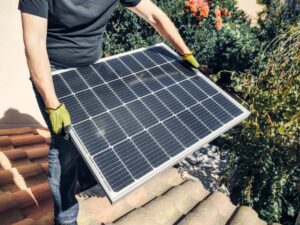
JA Solar panels review UK: DeepBlue 4.0 Pro specs, warranty and price
JA Solar's DeepBlue 4.0 Pro publishes 22.8% efficiency, 25-year product cover and a 30-year performance warranty to 87.4%. We read the datasheet and the UK price list.
29 September 2026