How Much Electricity Do Your TV and Games Console Really Use?
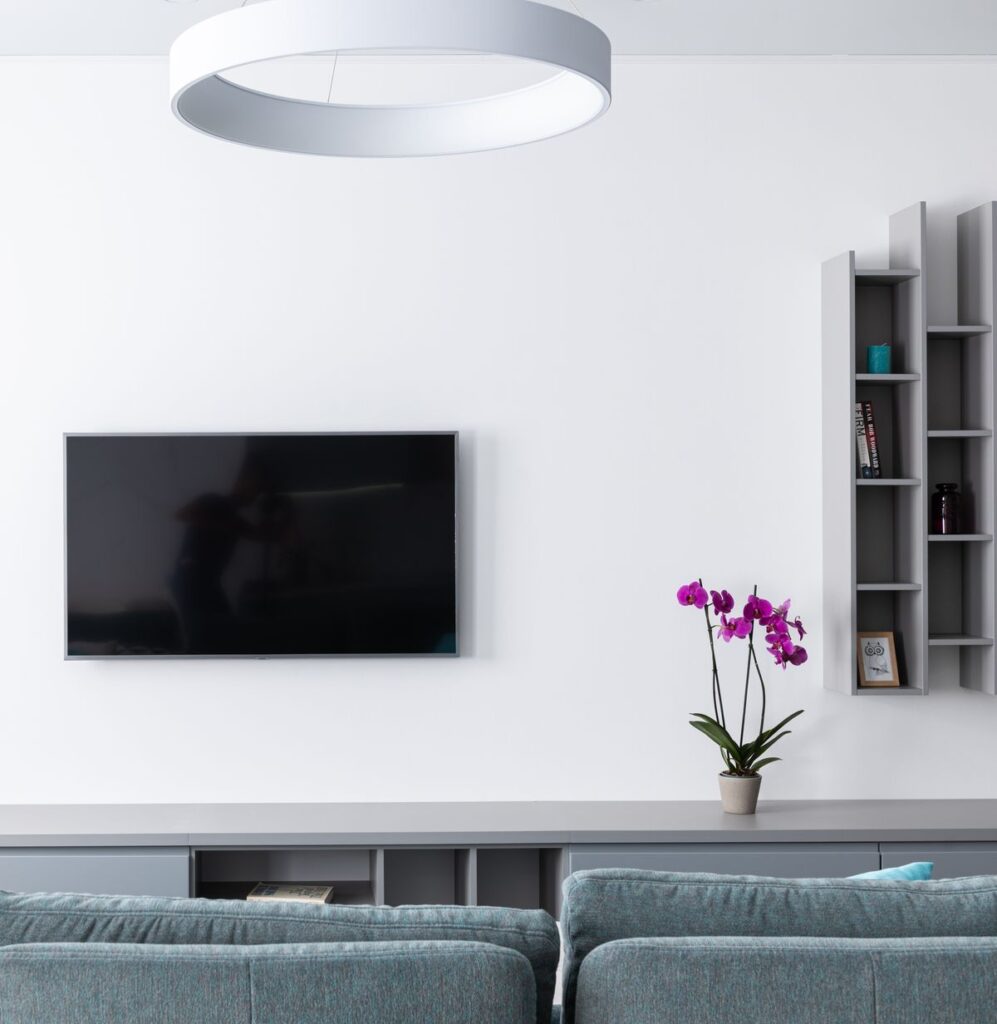
Quick answer: A 55-inch LED TV costs about 8p for a four-hour evening — roughly £31 a year — and a games console around 11p for a two-hour session, or £38 a year. The sneaky cost is standby: a console left in instant-on mode can quietly add about £25 a year for doing nothing.
All costs on this page are calculated at the October–December 2026 Ofgem price cap for Direct Debit customers: 26.32p per kWh of electricity, with gas comparisons at 7.97p per kWh. Unit rates vary slightly across the 14 GB regions, so treat these as good averages and check the rate on your own bill.
The sum for any screen in the house
Power (kW) × hours × 26.32p per kilowatt-hour. An 80W television is 0.08kW, so four hours costs 0.08 × 4 × 26.32p ≈ 8.4p. Every figure in the table below is that same sum with different wattages and hours — check your own model’s label or spec sheet and scale accordingly, because panel type and size move the numbers more than brand does.
TVs and consoles: typical daily and annual costs
| Device (typical power) | Daily use | Energy/day | Cost/day | Cost/year |
|---|---|---|---|---|
| 43” LED TV (55W) | 4 hours | 0.22 kWh | 5.8p | £21 |
| 55” LED TV (80W) | 4 hours | 0.32 kWh | 8.4p | £31 |
| 65” LED TV (100W) | 4 hours | 0.40 kWh | 10.5p | £38 |
| 65” OLED TV (150W) | 4 hours | 0.60 kWh | 15.8p | £58 |
| Games console, gaming (200W) | 2 hours | 0.40 kWh | 10.5p | £38 |
| Console in instant-on standby (12W) | 22 hours | 0.26 kWh | 6.9p | £25 |
| TV standby (0.5W) | 20 hours | 0.01 kWh | 0.3p | ~£1 |
Wattages are typical of current mid-range models and are stated as assumptions, not measurements — OLED panels and very bright HDR content sit at the higher end, and a console’s draw drops well below 200W for streaming or menus.
The standby problem: consoles are not TVs
Modern TVs are excellent in standby — around half a watt, a pound or so a year. Consoles are a different story: “instant-on” or “rest” modes keep networking and quick-resume features alive at roughly 10–15W around the clock. That convenience can cost two-thirds as much over a year (~£25) as the actual gaming (~£38 at two hours a day). Both major console makers offer an energy-saving standby mode that drops the draw to around a watt — the trade-off is slower start-up and no background downloads overnight. Our guides to standby power waste and energy vampire appliances cover the rest of the plug-in suspects.
Trimming the entertainment bill
- Switch the console to its energy-saving standby mode, or fully power it down after sessions — scheduled overnight downloads once a week cover most updates.
- Turn down TV backlight/brightness from showroom defaults; it’s often the single biggest factor in a panel’s real-world draw.
- Use the TV’s auto-off and ambient light sensor so it isn’t blazing at full brightness in a dark room — or playing to an empty one.
- Streaming boxes and soundbars add a few watts each around the clock; a smart plug or switched extension kills the cluster in one go.
Gaming PCs and monitors: the bigger cousins
A gaming PC plays by different rules: a mid-to-high-end machine can draw 300–500W under load, so a two-hour session at ~400W is 0.8kWh — about 21p, or roughly £77 a year daily, double a console’s draw before adding a monitor (typically 25–40W). Idle matters too: a desktop left running but unused at 60–100W around the clock would cost £138–£231 a year, which makes sleep settings on a PC worth far more than any console standby tweak. If a gaming PC lives in your house, it belongs near the top of your electricity-audit list.
Measure it: two free ways to get real numbers
Our table uses typical wattages, but your own setup is easy to measure. A smart plug with energy monitoring under the TV unit captures the whole entertainment stack — TV, console, soundbar, set-top box — and a week of data tells you both the evening cost and the overnight standby leak. No smart plug? Your smart meter’s half-hourly data shows the house baseline at 3am; if it’s much above 100–150W, something (often the TV corner or an old fridge) is drinking quietly, and switching suspects off one night at a time will find it. Try our calculator to put the results in context of your whole bill.
FAQs
How much does it cost to watch TV all day?
Ten hours on a 55-inch LED TV (80W) is 0.8kWh — about 21p at the current cap. Even a big OLED at 150W comes to roughly 39p for the same marathon. Screens are cheap to run; it’s heaters and hot water that dominate bills.
Does gaming use much more electricity than streaming?
Yes — a console rendering a demanding game can draw several times what it uses to stream video (roughly 30–70W when streaming versus up to ~200W gaming). Per evening the difference is still only a few pence.
Is it worth unplugging the TV at night?
For the TV itself, barely — half a watt of standby is about a pound a year. The win comes from the pile of devices around it: console in instant-on, set-top box, soundbar and router-adjacent gadgets together can add tens of pounds a year, which is why a switched extension lead pays its way. Try our energy calculator to see what your setup adds up to.

Related Articles

Best electric heating for a flat with no gas, ranked by running cost
No gas supply doesn't mean expensive heating is inevitable. Air-to-air heat pumps, storage heaters, infrared and panel heaters ranked by what they actually cost to run.
14 October 2026
Storage heater settings for winter: input, output and Economy 7 timing
Input fills the bricks with cheap overnight heat, output spends it. Set them the right way round and Economy 7 works as promised. The winter baseline settings, scenario by scenario,…
14 October 2026
Best combi boiler for a small flat: compact, low-output picks
Small flats need small, quiet combis that fit a kitchen cupboard and don't short-cycle on four radiators. Our picks with prices, dimensions and warranty terms.
12 October 2026