Do solar panels work in a power cut? Backup power explained
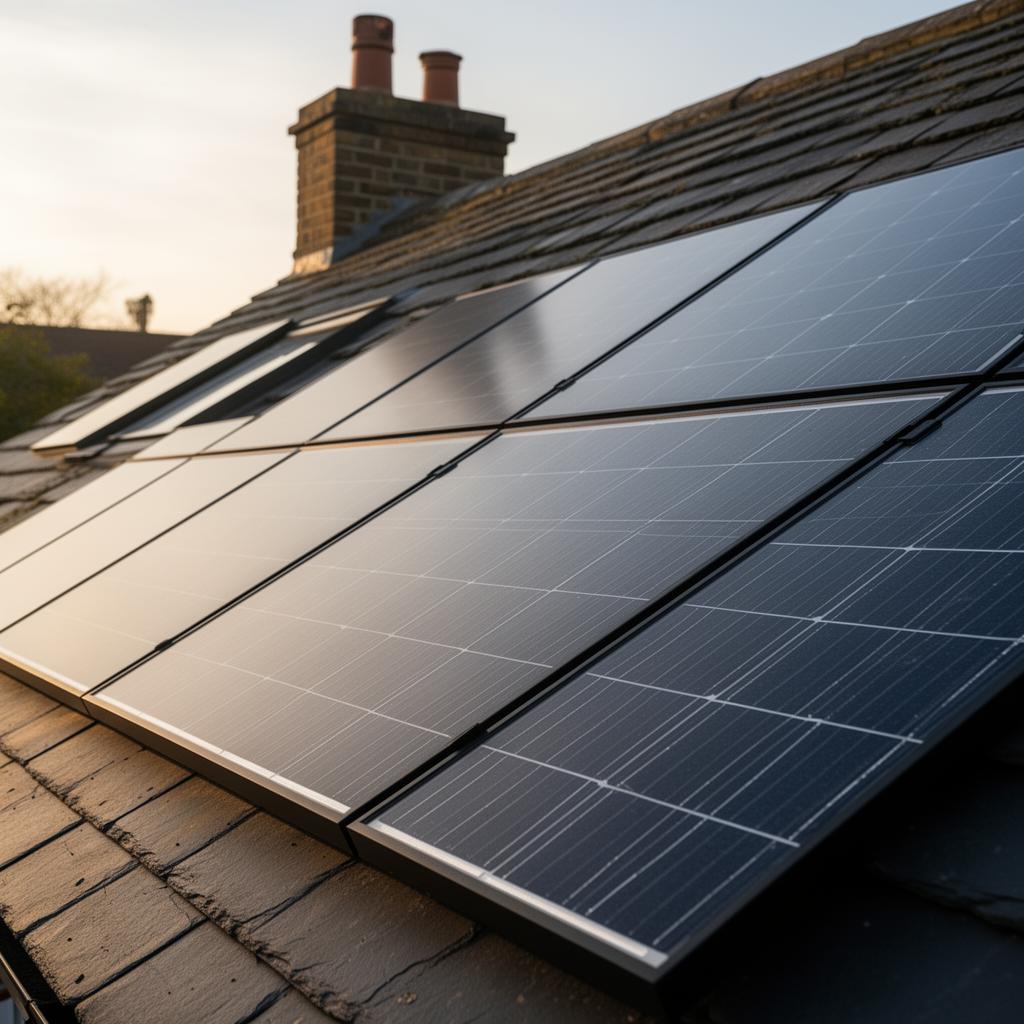
Quick answer: No. Standard grid-tied solar panels switch off in a power cut, because UK connection rules (G98 and G99) make the inverter disconnect when the grid fails. To keep the lights on you need a battery with backup. Wiring an EPS circuit for essentials typically adds £300 to £600, while whole-home backup needs a gateway, about £1,000 to £1,200 for Tesla’s.
It catches almost everyone out. Panels on the roof, a charged battery on the wall, and the house still goes dark when the street does. Here’s why that happens, which systems get round it, and what each option costs.
Why do solar panels switch off in a power cut?
Safety. When the grid goes down, the engineers repairing it need the lines to be dead, and an inverter still pushing power into them would put those engineers at risk. So every grid-connected inverter carries loss-of-mains protection. Every small inverter must be fully type tested under G98 before it connects to the network, and the type-test report filed on the ENA’s register includes a loss-of-mains protection test. And as Green Hat Renewables explains, G99 requires grid-tied inverters to shut down when mains power is lost.
Your panels keep making DC electricity in daylight, but with the inverter off it has nowhere to go. That’s true whatever the brand or size of system, and whether or not you have a battery. A battery only helps if the system can first cut your home off from the grid and then run it as a separate island. Tesla’s Powerwall 3 datasheet describes exactly that job for its Backup Gateway 2: it detects the outage and disconnects the battery from the grid to prevent backfeed. Our G98 vs G99 guide covers the connection rules themselves.
Do any solar panels keep working in a power cut?
A few set-ups do, because they island the house properly.
- A Powerwall 3 with Backup Gateway 2. Tesla’s UK page says the Powerwall helps keep your solar system running during an outage.
- Enphase microinverter systems with the IQ System Controller. Solar4Good says Enphase’s Sunlight Backup can keep IQ8 solar running in an outage even without a battery, in daylight only.
- Hybrid battery systems in backup mode. Green Hat says panels can recharge the battery through the hybrid inverter during a daytime outage.
Basic EPS set-ups vary, so put this exact question to the installer: can the panels recharge the battery while the grid is down?
EPS or whole-home backup: what’s the difference?
EPS (emergency power supply) backs up a socket or a small board of chosen circuits: fridge, router, some lights, phone chargers. Its output is capped by the battery inverter’s backup rating, which is 5kW on several common systems, per Green Hat. Whole-home backup puts a gateway between the meter and your consumer unit, so the entire house runs from the battery. Tesla’s datasheet shows both layouts for the Powerwall 3: whole home, or essential loads on a separate backup board.
Switchover speed is similar on the good systems. Green Hat, an installer, puts Tesla and Fox ESS at about 20 milliseconds (Tesla itself only promises a “quick backup transition”), AlphaESS quotes 20ms or less, and Sigenergy specifies 0ms under its own test conditions, according to Heatable. Your router and TV ride through that. A generator typically takes 30 to 60 seconds to start, Green Hat adds.
For most homes, EPS is enough. It covers what you actually miss in an outage for a few hundred pounds. Whole-home backup only earns its cost when the battery can carry your real loads, and a 5kW EPS supply leaves little room once a heat pump drawing 3 to 4kW is running, on Green Hat’s figures.
Which solar batteries offer backup?
| System | Backup offered | Switchover | Backup output | Extra hardware |
|---|---|---|---|---|
| Tesla Powerwall 3 | Whole home or essential circuits | About 20ms (installer figure) | Up to 11.04kW | Backup Gateway 2 |
| Sigenergy SigenStor | Whole home or essential circuits | 0ms claimed | Set by the controller (3.6kW to 12kW single-phase) | Sigen Gateway, priced separately |
| Fox ESS EVO | EPS as standard; whole home with a gateway | About 20ms (installer figure) | 5kW on EPS | EPS-BOX SP for whole home |
| Enphase IQ Battery 5P | Whole home | Not stated in the sources we checked | 3.2kVA per battery (UK model) | IQ System Controller 3/3G |
| AlphaESS SMILE G3 | Backup port on the inverter | 20ms or less | 3.68kW, 5kW or 8kW by model | Built in |
| SolarEdge Home Battery | Backup with an add-on module | Not stated in the sources we checked | 5kW with the module | Backup module |
Sources: Tesla’s datasheet; Heatable and Solar4Good on Sigenergy; Fox ESS UK and Green Hat on Fox and SolarEdge; Enphase UK’s datasheet, Solar Trade Sales and Solar4Good on Enphase; AlphaESS’s UK brochure. GivEnergy’s All in One also offered whole-home backup, but GivEnergy Ltd entered administration in April 2026, so we’ve left it out.
Backup isn’t standard just because the battery can do it. Octopus Energy’s package table offers whole-home backup only on its Tesla package, not its Fox or Enphase ones. Same battery brochure, very different power-cut behaviour, so check the quote. Our home battery comparison covers the rest of each system’s spec.
How much does solar battery backup cost?
- An EPS circuit on a battery that already has EPS terminals: £300 to £600 for the extra electrical work, per Green Hat Renewables.
- Tesla’s Backup Gateway 2 and supporting hardware: about £1,000 to £1,200, per Solar4Good’s price guide.
- A whole-system example: Solar4Good lists an 18kWh Sigenergy system at £6,000 to £7,500, or from £9,600 with power-cut protection. That’s £2,100 to £3,600 for proper backup.
- A new consumer unit, if your board is old or full: £400 to £700, per Djuka Electrics.
- Starting with no battery: a Powerwall 3 costs about £7,395 (Heatable) to £7,999 (Octopus Energy) installed; our Powerwall 3 review breaks down whether the Gateway is included.
If your existing battery inverter has no EPS terminals, backup means changing hardware. At that point it’s rarely worth doing for backup alone. Our guides to adding a battery to existing solar and battery installation costs cover the rest of the bill.
What can battery backup power?
Green Hat’s load scenarios make a useful guide. Essentials (fridge, lights, phone charging) draw about 0.5kW. Add a TV and laptop and you’re near 1kW. Normal household use with cooking is around 2kW, and a running heat pump 3 to 4kW.
- Gas heating: Northern Powergrid points out that most boilers need electricity, so put the boiler circuit on backup if you want heat.
- Heat pumps: Green Hat recommends a battery with at least 6 to 8kW of continuous output for heat pump backup. That points to a Powerwall 3 or a larger SigenStor controller, not a 5kW EPS supply.
- Showers, ovens and hobs: leave them off EPS circuits. An electric shower rated at 9.5kW is beyond a 5kW EPS supply outright, and would drain a full 13.5kWh battery in about 85 minutes.
- Medical equipment: Tesla’s warranty says the Powerwall isn’t intended as a primary or backup power source for life-support or other medical equipment. Northern Powergrid advises a plan, a backup supply where possible and joining its free Priority Services Membership.
How long will a battery last in a power cut?
Divide the energy stored by the load. Hours of backup = kWh in the battery ÷ kW you’re drawing. Here’s that sum for a full Powerwall 3 (13.5kWh), a full Fox ESS EVO (10.24kWh at 95% depth of discharge, so about 9.7kWh usable), and a battery holding only a 20% reserve of 13.5kWh, which is 2.7kWh.
| Load | Full Powerwall 3 (13.5kWh) | Full Fox EVO (about 9.7kWh) | 20% reserve only (2.7kWh) |
|---|---|---|---|
| Essentials, 0.5kW | 27 hours | 19.5 hours | 5.4 hours |
| Light use, 1kW | 13.5 hours | 9.7 hours | 2.7 hours |
| Normal use with cooking, 2kW | 6.75 hours | 4.9 hours | 1.35 hours |
| Heat pump and essentials, 4kW | 3.4 hours | 2.4 hours | 40 minutes |
The last column is the one to worry about. A battery on a time-of-use tariff is often close to empty by late evening, and in an outage you get whatever charge is left. If backup matters to you, set the app to hold a reserve. And check whether a smart tariff can override it: our Intelligent Octopus Flux guide notes that Octopus manages the battery for your bill, not for backup.
Two things stretch those figures. In daylight, a system that islands properly lets the panels top the battery up. And Tesla’s Storm Watch charges the battery to full when severe weather is forecast. It’s also worth knowing what you’re protecting: Northern Powergrid says most fridges keep food fresh for up to 12 hours and chest freezers up to 24, if you keep the doors shut.
What about a generator?
A portable generator is the cheap way to keep a fridge and a phone charger going through a long outage. Two rules. Never run one indoors: National Grid warns that fuel-burning appliances give off carbon monoxide. And never feed a generator into your house wiring through a socket. Connecting one to the home’s circuits needs a changeover switch fitted by a qualified electrician, so it can’t push power back into the network, for the same safety reason your solar inverter shuts down.
Plug appliances straight into the generator instead. It won’t switch over in milliseconds like a battery, and it needs fuel and fresh air, but for a rare cut it’s a fraction of the price of whole-home backup.
Is battery backup worth paying for?
For most urban homes, not as a reason to buy a battery. If you’re fitting one anyway, spend the £300 to £600 on an EPS circuit for the fridge, router and boiler, and put the rest of your budget into capacity.
Whole-home backup earns its cost in a narrower set of homes. Rural properties on overhead lines see more cuts: Green Hat, an installer in East Anglia, says some rural properties on 11kV spurs have three to five interruptions a year. Homes heated by a heat pump lose all heating in an outage, and full-time home workers lose a day’s income. If that’s you, choose a system with backup designed in, with enough output to carry the heating. Our guide to batteries with heat pumps goes further.
What to ask an installer before you sign
- Is this EPS or whole-home backup, and which circuits stay live?
- What’s the backup output in kW, and the switchover time?
- Can the panels recharge the battery while the grid is down?
- What does the backup hardware cost as a separate line?
- Does my consumer unit need replacing?
- What reserve will the battery hold for outages, and can my tariff override it?
- Does the job need G99 approval, and how long will that add?
If you’d like quotes with those answers in writing, request a free quote: up to three approved installers who cover your area may contact you. No charge, no obligation.
We haven’t tested these systems: this guide compares published specifications, prices and warranty terms, checked 25 September 2026.
FAQs
Do solar panels work in a power cut?
Not on a standard grid-tied system: the inverter must shut down when the grid fails. They can keep working with a battery system that islands the house, such as a Powerwall 3 with Backup Gateway 2, or an Enphase system with the IQ System Controller.
What is power cut protection for solar panels?
Nothing on your roof prevents a power cut; protection means keeping your own supply running when the grid drops. That takes a battery with a backup function. EPS keeps a few chosen circuits running and typically adds £300 to £600 of wiring. Whole-home backup uses a gateway to run the entire house; Tesla’s Backup Gateway 2 is about £1,000 to £1,200 with its hardware.
How long will a home battery backup system last?
Divide stored kWh by the load. A full 13.5kWh Powerwall 3 runs 0.5kW of essentials for about 27 hours, or a 4kW heat pump and essentials for about 3.4 hours. A battery holding only a 2.7kWh reserve gives about 5.4 hours of essentials.
Can I add backup to my existing solar and battery?
Often, if your battery inverter has EPS terminals: an electrician can wire a backed-up circuit for about £300 to £600. If it doesn’t, backup means new hardware, which is rarely worth it for backup alone.
Can I use a generator with solar panels in a power cut?
Yes, but run it outdoors and plug appliances into it directly. Connecting a generator to your house wiring needs a changeover switch fitted by a qualified electrician, so it can’t feed power back into the network.
Getting paid enough for your exported power?
Export rates vary twenty-fold between suppliers. We rank every SEG and export tariff monthly, with the conditions attached to each.

Related Articles

Tesla Powerwall 3 vs GivEnergy All in One: what changed in 2026
Both store 13.5kWh of LFP. One discharges at 11.04kW, the other at 3.6kW, and only one is backed by a company still trading after GivEnergy entered administration in April 2026.
30 September 2026
Trina solar panels review UK: Vertex S+ specs, warranty and verdict
Trina's Vertex S+ 445W publishes 22.3% efficiency, 25-year product cover and a dual-glass build. We read the datasheet and say when it's worth specifying and when it isn't.
30 September 2026
JA Solar panels review UK: DeepBlue 4.0 Pro specs, warranty and price
JA Solar's DeepBlue 4.0 Pro publishes 22.8% efficiency, 25-year product cover and a 30-year performance warranty to 87.4%. We read the datasheet and the UK price list.
29 September 2026