JA Solar panels review UK: DeepBlue 4.0 Pro specs, warranty and price
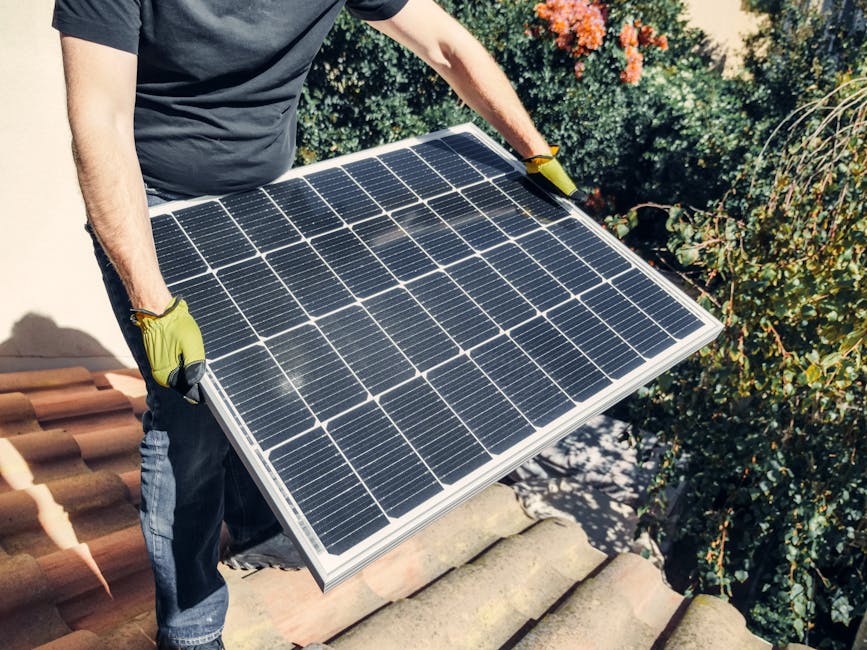
Quick answer: JA Solar’s DeepBlue 4.0 Pro is one of the two most commonly fitted panels on UK roofs. The 455W version publishes 22.8% efficiency, a 25-year product warranty and a 30-year performance warranty holding 87.4% of rated output. It’s safe, well-priced and dull. On a roof, dull is what you want.
We haven’t fitted or tested any of these panels. Everything below comes from published datasheets, warranty documents and UK retail listings, all checked on 27 July 2026.
What JA Solar actually sells in the UK
JA Solar is a Chinese manufacturer, listed in Shenzhen, and one of the largest module makers in the world. In Britain it and Jinko turn up on more MCS-certified installs than almost any other brand. That buys you two useful things. Your installer has fitted them before, and spare modules will still be findable in a decade.
The range you’ll be quoted is the DeepBlue 4.0 Pro, built on N-type TOPCon cells. The residential sizes run roughly 440W to 465W in the 54-cell format. Larger 60 and 72-cell versions exist for commercial roofs and occasionally get pushed at homeowners with big barn-style pitches.
The published specification
| Spec | DeepBlue 4.0 Pro 455W |
|---|---|
| Rated power | 455W |
| Module efficiency | 22.8% |
| Cell technology | N-type TOPCon, bifacial double glass |
| Temperature coefficient | -0.29%/degC |
| Product warranty | 25 years |
| Performance warranty | 30 years |
| Year one degradation | 1% or less |
| Annual degradation, years 2 to 30 | 0.4% or less |
| Output at year 30 | 87.4% or more of rated |
| Dimensions | 1,762 x 1,134 x 30mm |
| Weight | 22kg |
Figures from the Quality Heating listing for the traceable MC4-EVO2A black frame version, checked 27 July 2026.
The efficiency question
22.8% puts JA Solar in the upper half of the mainstream field. Behind the back-contact brands, though: Aiko’s Neostar 3S publishes 24.5% and LONGi’s Hi-MO X10 publishes 23.8%. On a fixed roof area that’s real. Swap ten JA panels for ten Aiko and you gain around 7% more installed capacity.
But whether you should care depends entirely on your roof. If your usable slope holds twelve panels and you want 5kW, JA Solar gets you 5.46kW and there’s nothing to solve. Eight panels and you want every watt? Then the extra efficiency earns its money.
Warranty: better than it used to be
JA Solar’s older ranges carried shorter product cover than the 25 years that later became standard. The DeepBlue 4.0 Pro doesn’t. The Quality Heating listing for the 455W gives 25 years on product, 30 on performance, a 1% cap on first-year degradation and 0.4% a year after that (checked 27 July 2026).
One caution. The 87.4% year-30 floor is the industry standard for TOPCon, and it’s slightly worse than the 88.85% that Aiko and LONGi publish. On a 4kW array that gap is worth around 50kWh a year by year 30, which at the current 26.32p/kWh cap rate is about £13. It shouldn’t drive your decision. Our breakdown of real-world degradation against warranty lines covers why the guaranteed floor is usually pessimistic.
Check whether your quote lists the panel SKU. Warranty terms differ between the mono-glass and double-glass versions of nominally the same range, and a quote that just says “JA Solar 455W” isn’t enough to hold anyone to.
Price
JA Solar sits in the value half of the market, though the range spans widely depending on which variant you get. On 27 July 2026 Quality Heating listed a JA Solar 450W N-type all-black at £113 including VAT, or about 25p per watt, and the DeepBlue 4.0 Pro 455W (model JAM54D-40-455-LB-TS-MC4) at £239, or about 52p per watt.
That’s a big spread for one brand, and the listings don’t fully explain it. Both describe themselves as traceable, so supply-chain paperwork isn’t the thing separating them. Frame, glass and connector specification are. Which is the point. The badge tells you nothing about the price you should be paying, and the model code tells you everything.
For context, our modelled mid-point cost for a domestic solar install is £6,496 (see how we calculate costs). Ten JA Solar 450W panels at the cheap SKU price is under £1,200 of that. The scaffolding, inverter, labour and DNO paperwork are the rest.
Who should fit JA Solar
Buy it if you have roof space to spare and you’d rather put the saved money into a bigger array or a battery. Twelve JA panels beat ten Aiko panels on total generation and usually on price.
Skip it if your roof is genuinely tight. At 22.8% you’re leaving watts on a small roof that a back-contact panel would capture, and on a constrained slope that gap doesn’t go away.
Also skip it if you’re being quoted the £239 SKU for a domestic roof without a clear reason. Ask what the £113 listing would cost instead, and ask what the difference actually buys you.
Before you sign
Confirm the installer holds current MCS certification, since it gates your Smart Export Guarantee payments. Get the panel model number in writing. The brand name on its own isn’t a specification. Then run the numbers yourself with our cost calculator and the payback guide. Wider context on the field sits in our brand comparison and the solar panels guide.
FAQs
Are JA Solar panels good quality?
On published specification they’re mid-to-upper tier: 22.8% efficiency, 25-year product warranty, 30-year performance warranty to 87.4%. They’re not the most efficient panel you can buy in Britain, and they’re not trying to be.
How long do JA Solar panels last?
The performance warranty runs 30 years to 87.4% of rated output. Actual service life is usually longer than the warranty term, and we cover the evidence in our guide to how long solar panels last in the UK.
JA Solar or Jinko?
Close to a coin toss. JA Solar’s DeepBlue 4.0 Pro publishes 22.8% against Jinko Tiger Neo’s 22.0%, and both offer 25-year product plus 30-year performance cover. Take whichever your installer stocks and prices better.
Getting paid enough for your exported power?
Export rates vary twenty-fold between suppliers. We rank every SEG and export tariff monthly, with the conditions attached to each.

Related Articles

Tesla Powerwall 3 vs GivEnergy All in One: what changed in 2026
Both store 13.5kWh of LFP. One discharges at 11.04kW, the other at 3.6kW, and only one is backed by a company still trading after GivEnergy entered administration in April 2026.
30 September 2026
Trina solar panels review UK: Vertex S+ specs, warranty and verdict
Trina's Vertex S+ 445W publishes 22.3% efficiency, 25-year product cover and a dual-glass build. We read the datasheet and say when it's worth specifying and when it isn't.
30 September 2026
Selling a House With Leased or Loan-Funded Solar Panels: What Buyers and Lenders Check
Owned panels pass with the house. Loan-funded panels are simple too — the loan is yours, not the property’s. The tricky case is the 2010s rent-a-roof lease, where the buyer’s…
28 September 2026