Solar panels on slate roofs: fixings, costs and the in-roof option
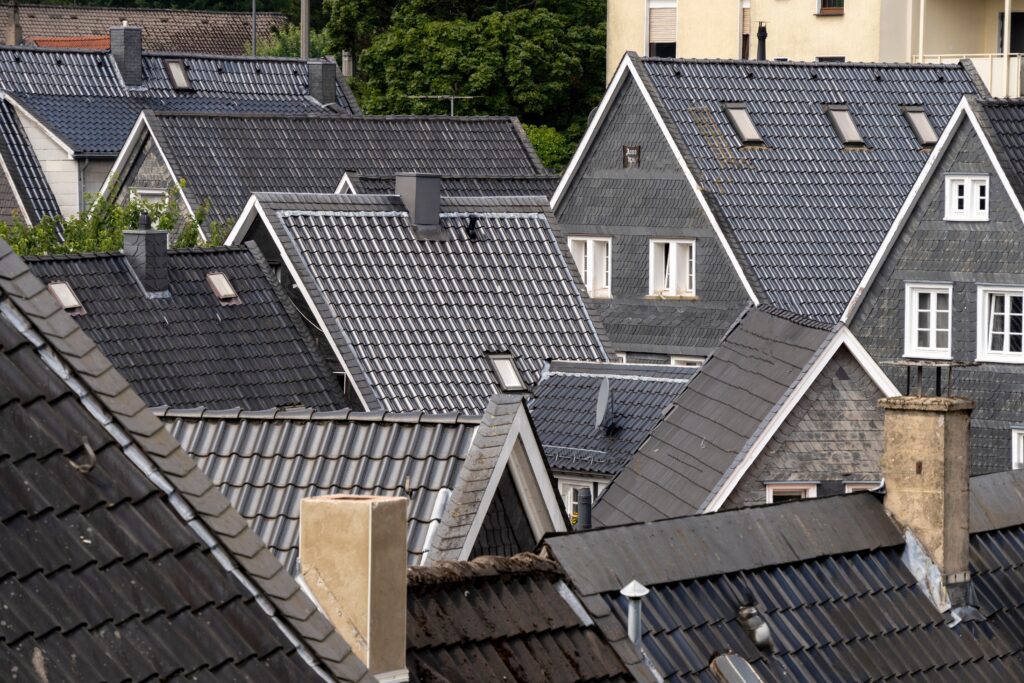
Quick answer: Yes, slate roofs take solar panels, but expect to pay around 30% more than a standard tile installation (roughly £9,100 against £7,000 for an average system, per The Eco Experts) because every fixing point means lifting slates, mounting to the timbers and dressing in new flashing. In-roof systems avoid most of that.
Why is slate harder than concrete tile?
On a concrete or clay tile roof, an installer lifts a tile, hooks a bracket over the batten and drops the tile back. Minutes per fixing. Slate allows none of that. Slates are individually nailed down and brittle, so they can’t be lifted without risking breakage, and drilling through them invites cracks and leaks (Sunsave, checked August 2026).
Age compounds the problem. Much of Britain’s slate sits on Victorian and Edwardian roofs, where the state of the nails and battens matters as much as the slate itself. A roof already shedding the odd slate (what roofers call nail sickness) needs sorting before anything is bolted to it.
How do installers fix panels to a slate roof?
The proper method is slow and surgical. Around each fixing point the installer frees the nails with a slate ripper and removes slates intact, fixes a bracket to the rafters or battens with a standoff, dresses in new flashing, then cuts and refits slates around the bracket (Sunsave; The Eco Experts). The panel load ends up on the roof timbers, and the weatherproofing is rebuilt rather than punctured.
All that handwork takes time. Sunsave puts slate installations one to two days longer than average, and The Eco Experts reckons a typical slate job runs around five days against one or two on a standard roof. Every fixing point on slate is a small roofing job, and you’re paying for a roofer’s care as much as an electrician’s.
Is in-roof the better answer on slate?
Often, yes. An in-roof system removes the problem rather than managing it: the panels sit in weathertight trays that replace a section of slates entirely, so nothing is hooked or drilled through the slate field, and the finish sits flush with the roof line. The trade-off is output. Integrated panels run around 3% less efficient than on-roof panels because less air circulates behind them (The Eco Experts). Our in-roof solar guide covers the systems and costs in detail.
If your slate roof needs work anyway, in-roof is the obvious route, because you’re paying for the strip-back once. On a sound roof where output matters most, on-roof with proper slate fixings still wins. The third option, solar slates that mimic the roof itself, looks the part and costs the most; our solar roof tiles comparison runs those numbers.
| Route | How it deals with the slate | Cost position | Best for |
|---|---|---|---|
| On-roof with slate fixings | Brackets to the timbers through re-flashed openings | Around 30% above a standard tile install (The Eco Experts) | Sound roofs, maximum output |
| In-roof (integrated) | Panel trays replace a section of slates | Varies with roof work; around 3% output penalty | Reroofs, period streetscapes |
| Solar slates | Each slate is a small PV tile | Highest by a distance | Strict aesthetics, deep budgets |
What will slate add to the bill?
The Eco Experts puts an average slate installation at £9,134 against £7,026 on a standard roof, roughly 30% more (checked August 2026). For context, our modelled UK average for a solar installation is £6,496; see how we calculate costs. The premium is almost entirely labour: more days on the roof, and scaffolding hired for longer. Our scaffolding costs guide explains that line on the quote, and our slate installation cost breakdown digs further into the figures.
Two questions sort serious slate installers from optimists: who physically reinstates the slates (a roofer on the team, or the electricians?), and where matching slate comes from if any break. Reclaimed Welsh slate isn’t cheap, and colour-matching shows on a visible slope. An installer with no answer to the slate-matching question hasn’t done many slate roofs.
Do conservation areas change anything?
Slate and conservation areas overlap heavily, so the planning question comes up on most slate jobs, and the rules are friendlier than people expect. Roof-mounted solar remains permitted development in most conservation areas. The conditions: panels must not project more than 200mm from the roof slope, must not sit higher than the highest part of the roof excluding the chimney, and in a conservation area or World Heritage Site must not be fitted to a wall fronting a highway (Planning Portal, checked August 2026).
Listed buildings are the exception. Permitted development doesn’t apply and you’ll need consent, with no guarantee of getting it. Our guides to solar planning permission and solar on listed buildings cover both situations.
Where to start
Get the roof assessed honestly before anyone prices panels: age, nail condition, spare slates, timber state. Then price both the on-roof and in-roof routes, because on slate the gap between them narrows. We’re a comparison site, not an installer, and we haven’t fitted these systems ourselves; this guide is based on published installer methods and costs, checked August 2026. Our installer quote comparison launches soon; you can register interest here.
FAQs
Can panels be fitted to slate without removing any slates?
Not with on-roof brackets. Every fixing point needs local slates lifted, a bracket fixed to the timbers, and the slates refitted around it. Anyone proposing to drill straight through your slates is proposing a future leak.
Will a slate roof take the extra weight?
Usually, but it must be checked. A structural look at the rafters and battens is part of any proper survey, and older slate roofs sometimes need localised strengthening. No reputable installer skips this on a Victorian roof.
Is scaffolding always needed on a slate job?
Yes, and usually for longer than a standard install because the job runs more days. Slate work from ladders is neither safe nor precise, and the handling that slate demands needs a stable platform. Budget for it from the start.
Getting paid enough for your exported power?
Export rates vary twenty-fold between suppliers. We rank every SEG and export tariff monthly, with the conditions attached to each.
See what these numbers mean for your home
Free instant estimate — costs, savings, payback and grants for your region.

Related Articles
Solar Panel Removal and Reinstallation Costs: Reroofing With Panels in 2026
Reroofing with panels on top means paying to take them off and put them back — typically £100–£250 per panel. Here is the full cost breakdown, the warranty trap to…
26 August 2026
Intelligent Octopus Flux explained: what changes when Octopus runs your battery
Intelligent Octopus Flux pays the same rate for export as you pay for import and hands battery scheduling to Octopus's algorithm. How it differs from standard Flux, and who actually…
21 August 2026
Solar panel warranties explained: what the small print actually promises
A '25-year solar warranty' is really four separate warranties with different lengths and escape hatches. What product, performance, inverter and workmanship cover each promise, and what a claim looks like.
19 August 2026