Best solar panel brands UK 2026: what installers fit, compared
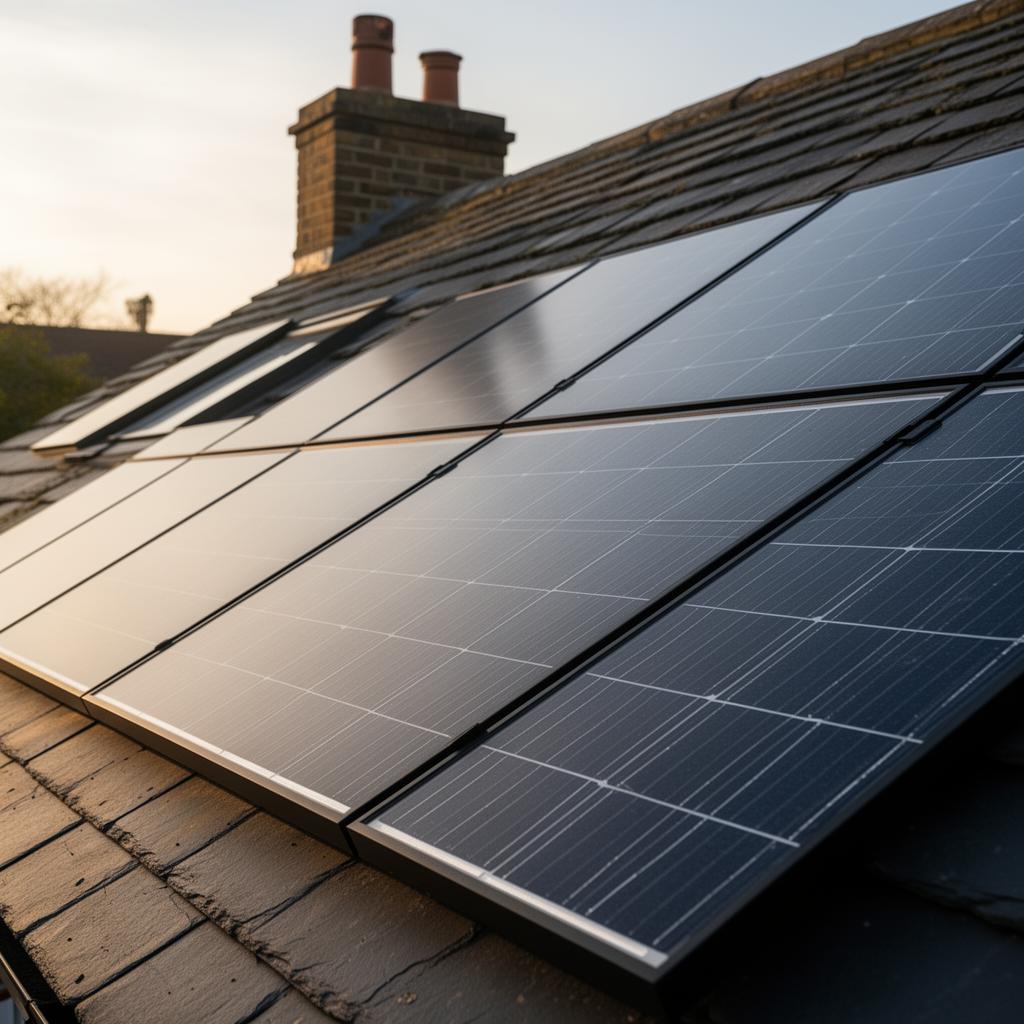
Quick answer: On published specs, Aiko’s Neostar 3S (24.5% efficient, 30-year product warranty) and SunPower’s M Class (up to 24.5%, 40 years) lead the panels UK installers fit. For most roofs, a 22.8% to 23.8% panel from JA Solar, Jinko, Trina, LONGi or DMEGC is the better buy at roughly 20p to 35p a watt. Check who stands behind the warranty: most big makers lost money in 2025.
We haven’t tested any of these panels. This roundup compares published datasheets, warranty terms and UK stockist prices, all checked in September 2026. Prices are single-panel retail prices including VAT. Installers buy at trade prices and fit at 0% VAT, so read them as price bands, not quotes.
Which solar panel brands do UK homeowners actually use?
Mostly whatever their installer stocks. Installers tend to carry a small number of brands, and quotes follow. Which? found that nearly half of Jinko Solar owners chose those panels because it was the only brand their installer fitted (Which?, April 2024 survey of more than 2,000 members).
We couldn’t find published brand-level installation figures for the UK. The closest guide is Which?’s brand reviews, updated August 2026, which cover Aiko, Canadian Solar, JA Solar, Jinko Solar, LONGi, REC, SolarEdge, Trina Solar and DMEGC; its January 2026 survey found members owning panels from more than 20 brands (Which?). Those, plus SunPower, Perlight and Q CELLS, are the names you’re likely to see on a UK quote.
The 2026 comparison
| Brand | Model family checked | Efficiency | Product / performance warranty | Output warranted at end | UK retail price (inc VAT) |
|---|---|---|---|---|---|
| Aiko | Neostar 3S 490W | 24.5% | 30 yr / 30 yr | 88.85% at yr 30 | £177 (36p/W) |
| SunPower (TCL) | M Class | Up to 24.5% | 40 yr combined | 89.3% at yr 40 | No retail price found |
| LONGi | Hi-MO X10 485W | 23.8% | 15 yr / 30 yr | 88.85% at yr 30 | £130 (27p/W) |
| DMEGC | Infinity RT 470W | About 23.5% | 25 yr / 30 yr | 87.4% at yr 30 | £92 (20p/W) |
| REC | Alpha Pure-RX | 22.1% to 23.3% | 20 yr (25 via REC-certified installer) / 25 yr | 92% at yr 25 | No current UK retail price found |
| Perlight | 515W Double Glass | 23.17% | 30 yr / 30 yr | About 82% (0.55% a year) | £100 to £200 a panel |
| Jinko | Tiger Neo 2.0 460W | 23.0% | 25 yr / 30 yr | 87.4% at yr 30 | £163 (35p/W) |
| Trina | Vertex S+ 460W | 23.0% | 15 or 25 yr, by market / 30 yr | 87.4% at yr 30 | £109 (24p/W) |
| JA Solar | DeepBlue 4.0 Pro 455W | 22.8% | 25 yr / 30 yr | 87.4% at yr 30 | £129 (28p/W) |
| Canadian Solar | TOPHiKu6 450W | 22.5% | 15 yr / 30 yr | 1% in year one, then 0.4% a year | £177 (39p/W) |
| Q CELLS | Q.TRON BLK M-G2+ | 22% | 25 yr / 25 yr | At least 90% at yr 25 | Not listed by stockists we checked |
Sources: Aiko, LONGi, JA Solar, Jinko, Trina and Canadian Solar prices and specs from UK stockist Quality Heating (Aiko, LONGi, JA Solar, Jinko, Trina, Canadian Solar); Aiko warranty confirmed by Midsummer Wholesale; Trina and Canadian Solar warranties, and the Canadian Solar 450W efficiency, from the makers’ datasheets (Trina, Canadian Solar) and the FMB; DMEGC from Powerland; SunPower from SunPower UK; REC from its datasheet; Perlight and Q CELLS from the FMB’s Perlight and Q CELLS reviews.
Are these companies still trading?
A 30-year warranty is only as good as the company behind it. GivEnergy Ltd, a battery maker, entered administration on 9 April 2026 and its warranties aren’t being honoured. Our guide to what happens when a manufacturer goes bust explains the fallout. Panel makers aren’t immune, so we checked each one in September 2026.
- LONGi, Trina, JA Solar, Jinko: all trading, and all made a loss in 2025. LONGi lost CNY 6.42 billion in 2025 and Trina CNY 7.03 billion (pv magazine). JA Solar forecast a 2025 loss of CNY 4.5 to 4.8 billion and Jinko a full-year loss (pv magazine). The losses come from an industry-wide price slump rather than one failing business, but they’re real.
- Aiko: trading. It forecast a first-half 2025 loss but a second-quarter profit, which PV Tech said made it the only PV materials maker then profitable in a single quarter (PV Tech).
- SunPower: the messiest story. Maxeon, which made SunPower-branded panels outside the US, agreed in November 2024 to sell its sales business outside the US to TCL (PV Tech), and the UK SunPower site is now run by TCL SunPower Global. Maxeon itself was placed under interim judicial management in Singapore on 9 April 2026 (Maxeon filing) and under judicial management on 29 May 2026 (Maxeon filing, June 2026). Check which company is named on your warranty certificate. The US installer SunPower Corporation, which filed for bankruptcy in August 2024, was a separate business: Maxeon was spun off from it in 2020 (pv magazine).
- REC: trading, but a June 2025 fire at its Singapore factory took cell lines offline and REC said the rest of its 2025 output would go to US customers first (Solar Power World). We found no current UK retail listing, so check your installer can get it.
- Meyer Burger: its German subsidiaries filed for insolvency in June 2025 (Solar Power World). We wouldn’t buy it now.
- SolarEdge: still trading after large losses and job cuts in 2024 and 2025. It matters more to you as an inverter maker than as a panel brand.
- Canadian Solar: trading, but its second-quarter 2026 net loss was about $77 million and it’s shifting focus to US manufacturing (Canadian Solar results, August 2026).
- Q CELLS: trading; Hanwha launched a US new-homes unit in April 2026 (Korea Times). We found no UK retail listing, so check your installer can actually get it.
- DMEGC, Perlight: trading, and our checks found no insolvency or UK exit. DMEGC showed its new Infinity RT 3.0 range at Intersolar Europe in June 2026 (DMEGC). Perlight runs a UK and EU sales centre in Oxford (FMB).
Efficiency: worth paying for only when the roof is full
Going from a 22.8% JA Solar panel to a 24.5% Aiko gets you about 7% more watts from the same roof area. Real, but only useful when the roof runs out before the budget does. Terraces, dormer bungalows and slopes broken up by a chimney: efficiency pays. A detached house with a big clear south slope: it usually doesn’t, because you just fit one more cheaper panel.
There’s a second ceiling. An inverter that exports no more than 16 amps per phase (about 3.68kW on a normal single-phase supply) can be fitted first and notified afterwards; anything bigger needs the network operator’s approval in advance, as our guide to solar export limits explains. If your system is held to that limit, squeezing more kWp onto the roof buys less than the datasheet suggests.
Temperature coefficients get quoted heavily and matter little in Britain. The datasheets we checked sit between -0.24%/°C (REC) and -0.29%/°C (Trina, Canadian Solar). On a UK roof that gap is a rounding error.
Warranty length isn’t the same as warranty quality
The single most useful thing you can do before signing is ask for the warranty document for the exact model on your quote. Ranges aren’t uniform. LONGi’s Hi-MO X10 has a 15-year product warranty against 30 years on performance. Trina’s Vertex S+ datasheet offers “up to 25 years” product cover, but its 25-year terms sit in a supplement for Australia and New Zealand, and the FMB lists 15 years for a Vertex S+ model. Canadian Solar’s English TOPHiKu6 datasheet says 15 years. REC’s 25-year product warranty needs an REC-certified installer who registers the panels.
Degradation floors are a tie-breaker. Most TOPCon panels in our table guarantee 87.4% at year 30; Aiko and LONGi guarantee 88.85%. On a 4kW array that’s about 58W at year 30. Our cost index puts a typical 4kWp system’s saving at up to £555 a year, so the gap is worth under £10 a year, and only near the end (solar panel costs). The exception is a panel that loses 0.55% a year, like the Perlight above: a 30-year product warranty doesn’t make up for ending near 82%. Our guides to what panel warranties cover and degradation over 25 years go further.
Premium or budget: what the extra money buys
Panels are a small slice of the bill. Ten JA Solar 455W panels at £129 are £1,290; ten Aiko 490W panels at £177 are £1,770. That’s £480 more for 4.9kW instead of 4.55kW, about 8% more capacity. Against the 2025/26 median of about £7,100 for a 4kWp install (£1,780 per kW, DESNZ), it’s roughly 7% on the total job. A fair trade if the roof is full. Wasted money if it isn’t.
Our verdict: for most UK homes, a mid-price 23% TOPCon or back-contact panel from JA Solar, Jinko, Trina, LONGi or DMEGC is the right buy. Pay for Aiko when roof space is the limit. Pay for SunPower or REC only if the long warranty is the point, and you’ve checked who backs it. The installer’s design and workmanship will move your generation far more than the badge will.
Our picks
- Small or awkward roof: Aiko Neostar 3S. The highest published efficiency here at 24.5%, with 30 years on both warranties.
- Best all-round value: LONGi Hi-MO X10, 23.8% for £130, if you accept 15 years of product cover. If that bothers you, JA Solar DeepBlue 4.0 Pro at £129 with 25 years.
- Lowest price per watt: DMEGC Infinity RT at about 20p a watt, still with 25 years of product cover.
- Low warranted degradation: REC Alpha Pure-RX at 92% after 25 years (only SunPower’s M Class, at 93%, warrants more). Use an REC-certified installer to get 25 years of product cover as well.
- Longest paper warranty: SunPower M Class at 40 years. Read the SunPower status note above first.
What we ignored: Tier 1 lists. They rank makers by bankability, which says nothing about whether your panel will still work in 2050. If a salesperson leads with Tier 1, ask about the warranty entity instead.
Whichever brand you land on, check the installer holds current MCS certification, and run your own numbers with the savings calculator. If you’re weighing roof-integrated options, see our solar tiles and in-roof comparison. To see which brands local installers would fit on your roof, request a free quote: up to three approved installers who cover your area may contact you. No charge, no obligation.
This comparison is based on published datasheets, warranty terms, UK stockist prices and company filings, all checked in September 2026.
FAQs
What are the best solar panel brands in the UK?
On published specs, Aiko and SunPower lead on efficiency at up to 24.5%. For value, JA Solar, Jinko, Trina, LONGi and DMEGC offer panels of 22.8% to 23.8% at roughly 20p to 35p a watt retail, with 15- to 25-year product warranties.
What solar brands do UK homeowners use most?
There’s no published brand-level installation data, but Which?’s 2026 brand reviews cover Aiko, Canadian Solar, JA Solar, Jinko, LONGi, REC, SolarEdge, Trina and DMEGC. Most people end up with whatever their installer stocks.
What are the most reliable solar panel brands in the UK?
We don’t test panels, so we judge reliability on paper: a long product warranty, a low warranted degradation rate and a company that’s clearly still trading. On that basis Aiko (30-year product warranty, 88.85% at year 30), JA Solar and Jinko (25-year product warranties) and REC (92% output at year 25) score best.
Is it still safe to buy SunPower panels in the UK?
The UK business is now run by TCL SunPower Global, while Maxeon, which used to supply SunPower-branded panels outside the US, has been under judicial management in Singapore since 2026 (interim from 9 April, full from 29 May). Check which company issues your warranty before relying on the 40-year cover.
Are Chinese-made solar panels any good?
Yes. Most brands on UK quotes are Chinese, and even REC builds its panels in Singapore. Judge the datasheet and the company behind the warranty, not the flag.
Getting paid enough for your exported power?
Export rates vary twenty-fold between suppliers. We rank every SEG and export tariff monthly, with the conditions attached to each.

Related Articles

Tesla Powerwall 3 vs GivEnergy All in One: what changed in 2026
Both store 13.5kWh of LFP. One discharges at 11.04kW, the other at 3.6kW, and only one is backed by a company still trading after GivEnergy entered administration in April 2026.
30 September 2026
Trina solar panels review UK: Vertex S+ specs, warranty and verdict
Trina's Vertex S+ 445W publishes 22.3% efficiency, 25-year product cover and a dual-glass build. We read the datasheet and say when it's worth specifying and when it isn't.
30 September 2026
JA Solar panels review UK: DeepBlue 4.0 Pro specs, warranty and price
JA Solar's DeepBlue 4.0 Pro publishes 22.8% efficiency, 25-year product cover and a 30-year performance warranty to 87.4%. We read the datasheet and the UK price list.
29 September 2026